Drawing Futures is an exhibition that merges traditional creative practices with emerging technologies, envisioning a future where creativity flourishes through hybrid solutions. It begins with color, to which we add movement, collaboration, music, and storytelling — resulting in a playful combination in which analog and digital forms joyfully collide.
- Exposition: Drawing Futures — Playful Creative Assistants
- Lieu: Espace créatif Caran d’Ache, Plateforme 10, Lausanne
- Dates: 14 au 24 mai 2024
- Designers: Basile Brun, Lauren Thiel, Mathis Baltisberger, Naomi Blidariu, Sarah Meylan
- Directeur de projet : Douglas Edric Stanley
- Professeurs : Alexia Mathieu, Douglas Edric Stanley, Laure Krayenbühl, Pierre Rossel
- Directrice HEAD – Genève : Lada Umstätter
- Chef de département, Master Media Design : Alexia Mathieu
- Responsable Communication & Digital, Caran d’Ache : Sophie Murbach
- Chargée de communication : Mélanie Miranda
- Chef de département Intérim, Master Media Design : Félicien Goguey
- Direction artistique : Laure Krayenbühl, Alexia Mathieu, Douglas Edric Stanley
- Développement : Pierre Rossel & Douglas Edric Stanley
- Assistant, Master Media Design : Pablo Bellon
- Scénographie : Lison Christe
- Brochure : Adam Chatir
- File: Drawing Futures Flyer A4
- Étudiant-ex : Andres Acosta Blaschitz, Ares Pedroli, Naomi Blidariu, Basile Brun, Adam Chatir, Daria Kotova, Debjyoti Dhowmick, Ekaterina Bliznyuk, Jonas Wolter, Lauren Thiel, Leyla Benkais, Mathis Baltisberger, Sarah Meylan, Jasmine Molano, Océane Serrat, Mathilde Schibler, Enzo Seurre
- Équipes techniques : Alexandre Simian, Chloé Michel, Clément Schlemmer, Daniel Zea, Frédéric Butor-Blamont, Isabelle Schnederle, Sébastien Pitteloud, Vytas Jankauskas, Xavier Plantevin, Sylvain Leurent, Raphaëlle Mueller
- Press HEAD: Drawing Futures — Playful Creative Assistants
Brief In this semester project, we collaborated with Caran d’Ache, a renowned Swiss company specializing in a wide range of writing and drawing instruments. Caran d'Ache instruments provide invaluable support to designers, illustrators, artists, and novices, facilitating the realization of their creative endeavors. Although the world of Caran d'Ache may initially appear distinct from digital design practices, a closer examination reveals a significant connection. Writing and storytelling serve as foundational elements in digital practices, whether it involves composing algorithms to generate poetry or experimenting with drawing machines.
More recently, AI algorithms have been employed to generate drawings and visuals by utilizing prompts with generative models. These models hold the potential for a future where AI serves as a co-creator, assisting artists in their creative process. While these prospects are promising, they may eliminate the tactile experience associated with drawing activities (such as tracing, coloring, exploring various hues, blending, etc.). Additionally, they present a future in which these collaborators may adopt conventional forms, resembling simple chatbots that engage through text-based dialogue.
What We Created For this exhibition, our aim was to craft playful AI creative assistants. The element of playfulness served as a catalyst for inspiration, encouraging individuals to broaden their artistic horizons. Leveraging the rich offerings of Caran d’Ache tools, we conceived a new breed of interactive objects.
Beginner's Mind Our primary focus was on designing interactive objects tailored for beginners — those who may not consider themselves artists or professionals and may benefit from additional guidance in their creative journey. Such individuals often require a lighthearted approach to ease into creative activities.
The Evolution of Assistants Throughout this project, we asked ourselves the following questions: In what forms and with what characteristics could an AI serve as an artist’s assistant? What novel combinations and engaging interactions could we envision in this context? How might we transcend the conventional metaphor of AI as a replacement for human creativity?
Novel Combinations By novel combinations we mean juxtaposing simple materials in unexpected ways. This can be achieved by taking complex and misunderstood technologies and integrating them into familiar technologies or gestures — thereby simplifying their complexity through the poetics of well-understood mechanisms and materials.
Finding Common Ground For this exhibition, the first semester students of the Media Design Master, HEAD – Genève collaborated with Caran d’Ache, a renowned Swiss company specializing in a wide range of writing and drawing instruments. Although the world of Caran d’Ache may initially appear distinct from digital design practices, a closer examination reveals a significant connection. Writing and storytelling, for example, serve as foundational elements for digital practices, whether it involves composing algorithms to generate poetry or experimenting with drawing machines.
Prototypes The principal working method of the Media Design Master programme uses a combination of field research, rapid prototyping, user journey studies, and technological development. In the field research phase, students explored various hypotheses using field observations, data collection, and user studies in order to develop their central concept around drawing futures. From this phase, we added rapid prototyping methodologies and experimental playtesting in order to further discover the core interactions and goals of each project. In parallel, students learned new methods and technologies related to electronics, programming, and industrial design and started integrating them into each project as it evolved.
- Color Catcher
- Sarah Meylan
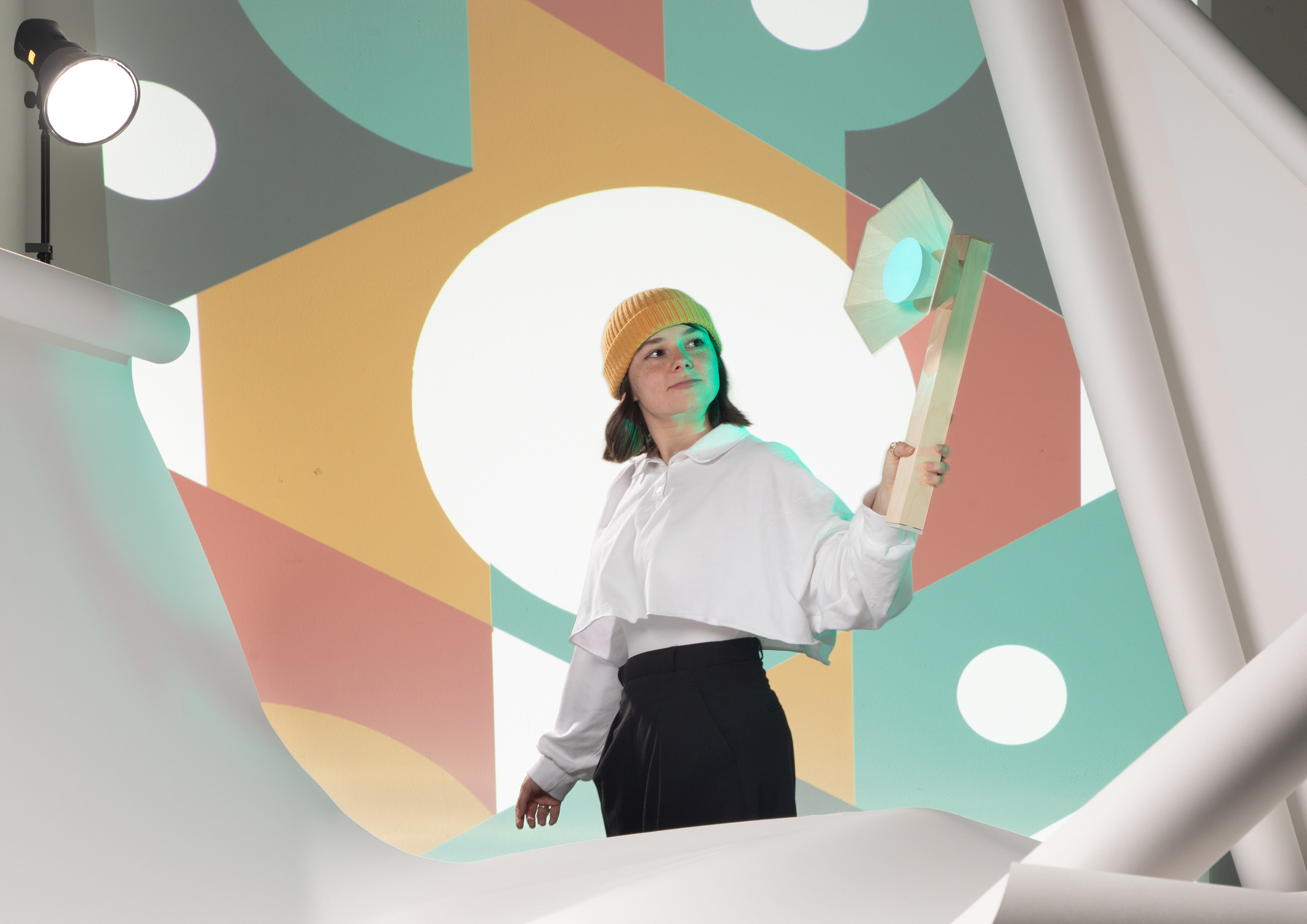
Color Catcher is a playful color-catching device. It allows users to create their own Caran d’Ache Luminance 6901® color palette by using curiosity as a guide. Both a toy and a tool, it uses play as a means of facilitating the creative process.
A strong color palette can transform any creative project in a sophisticated way. Yet selecting colors that complement each other in a distinctive manner can be an intimidating task. With Color Catcher, each player explores the interactive potential of the object in order to capture an unexpected color palette.
- Magic House
- Lauren Thiel
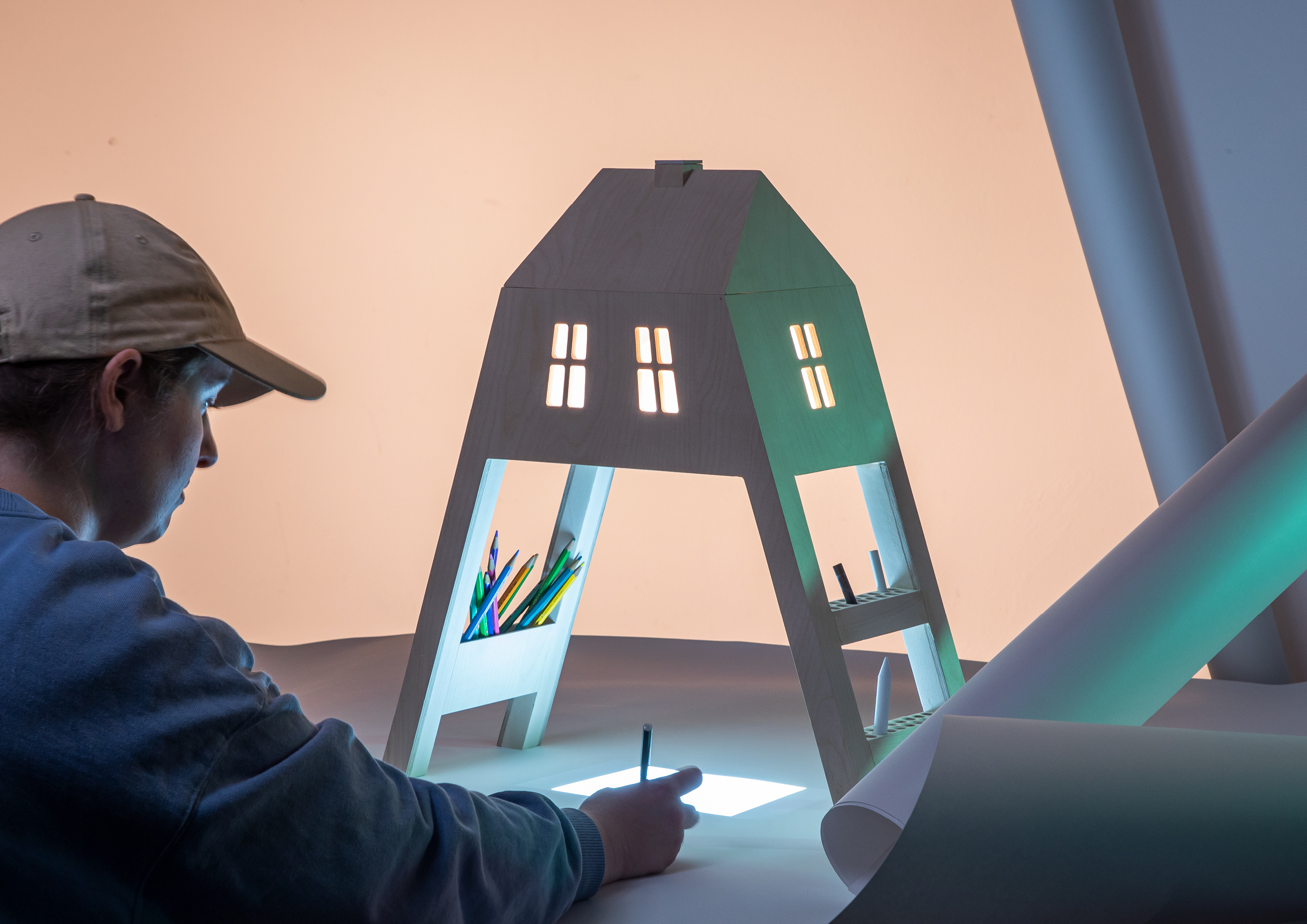
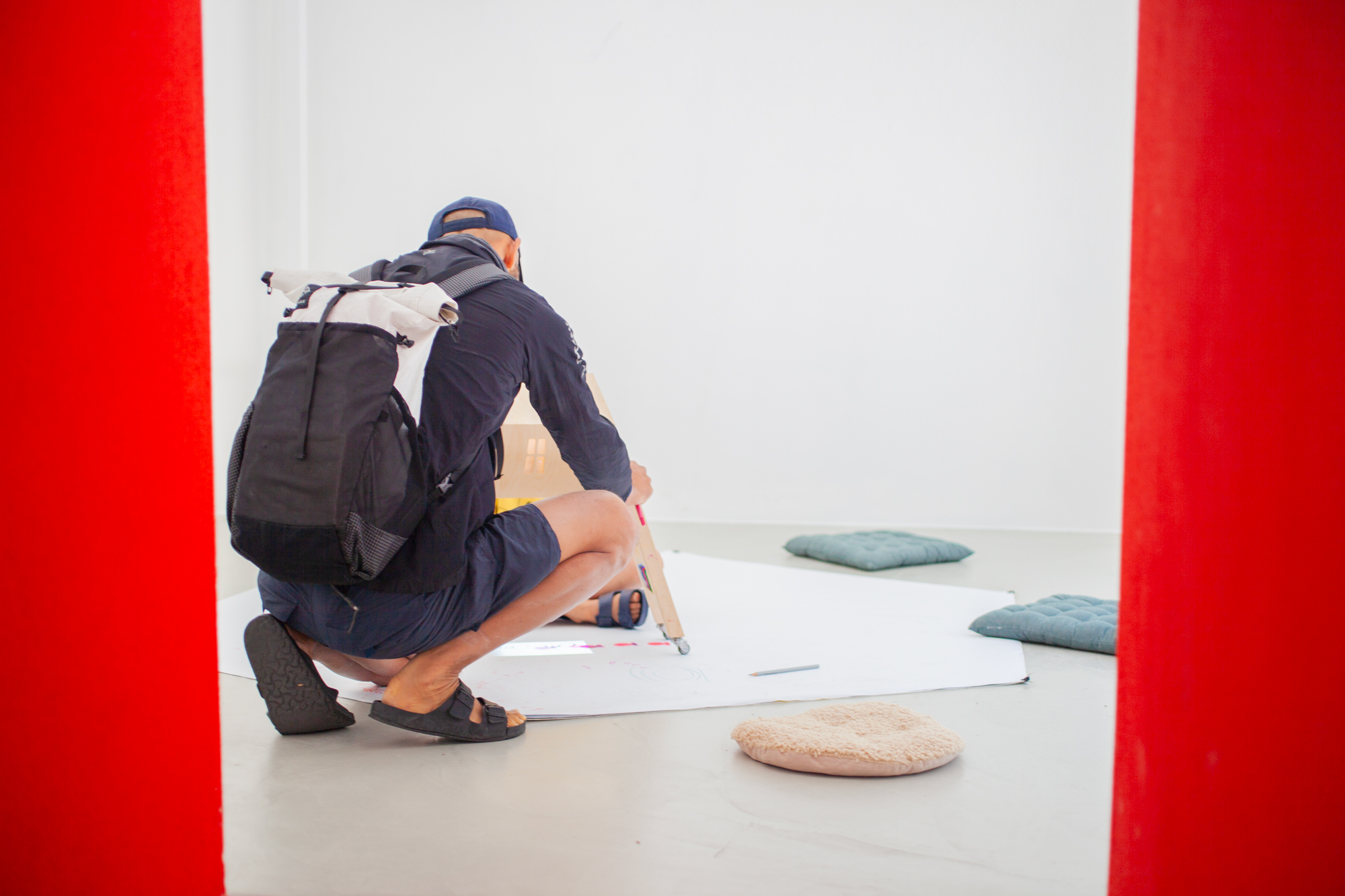
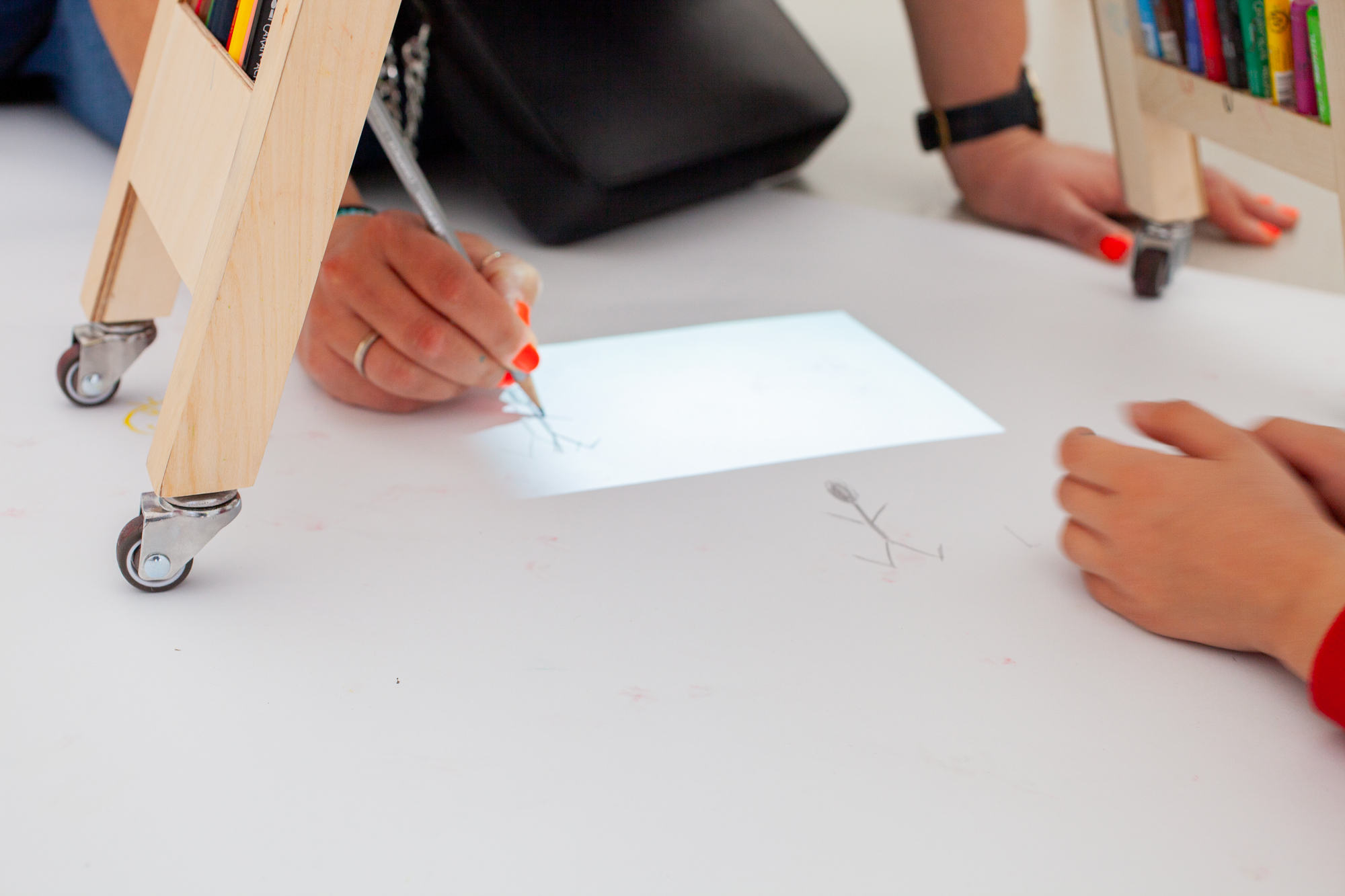
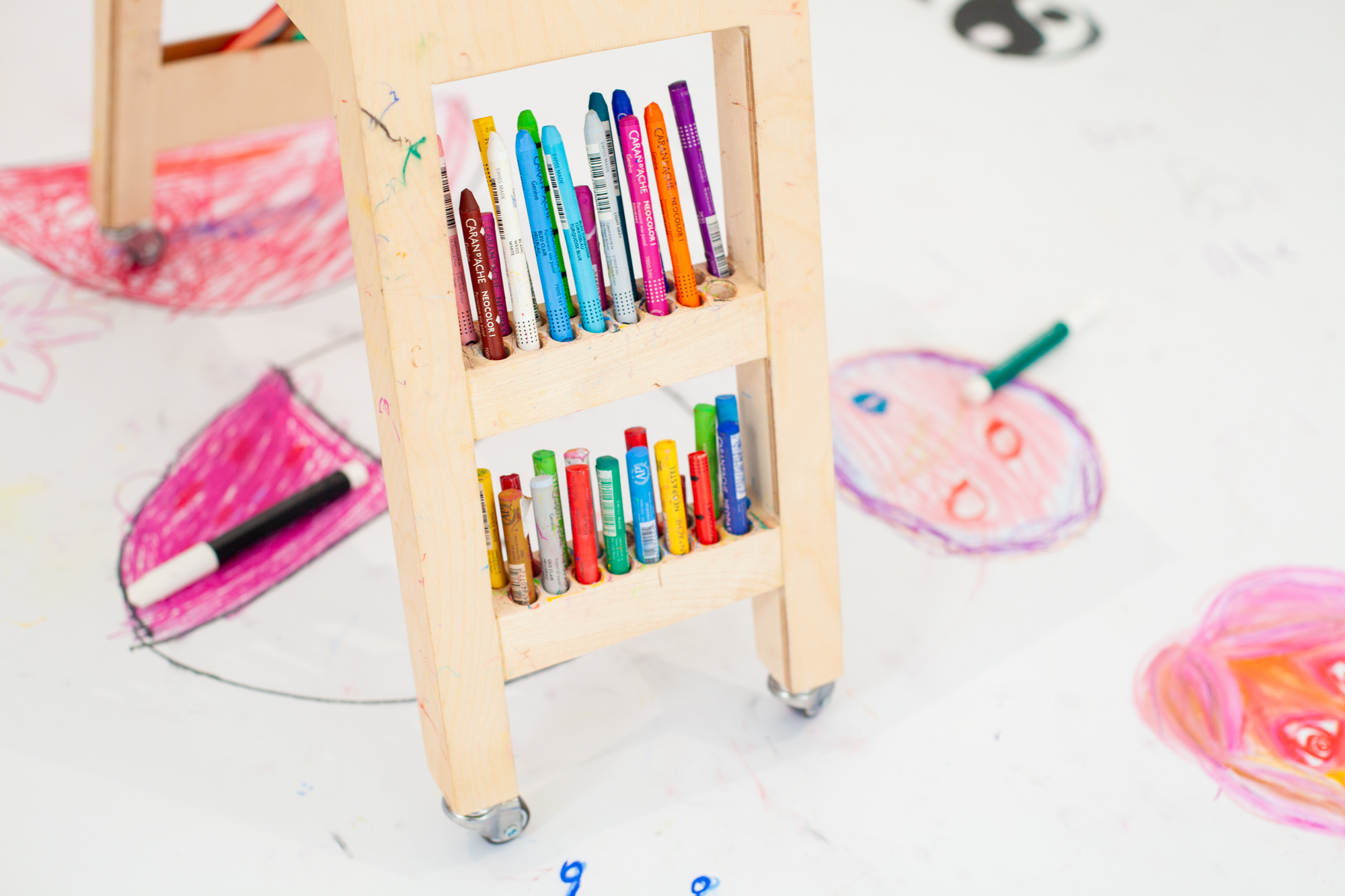
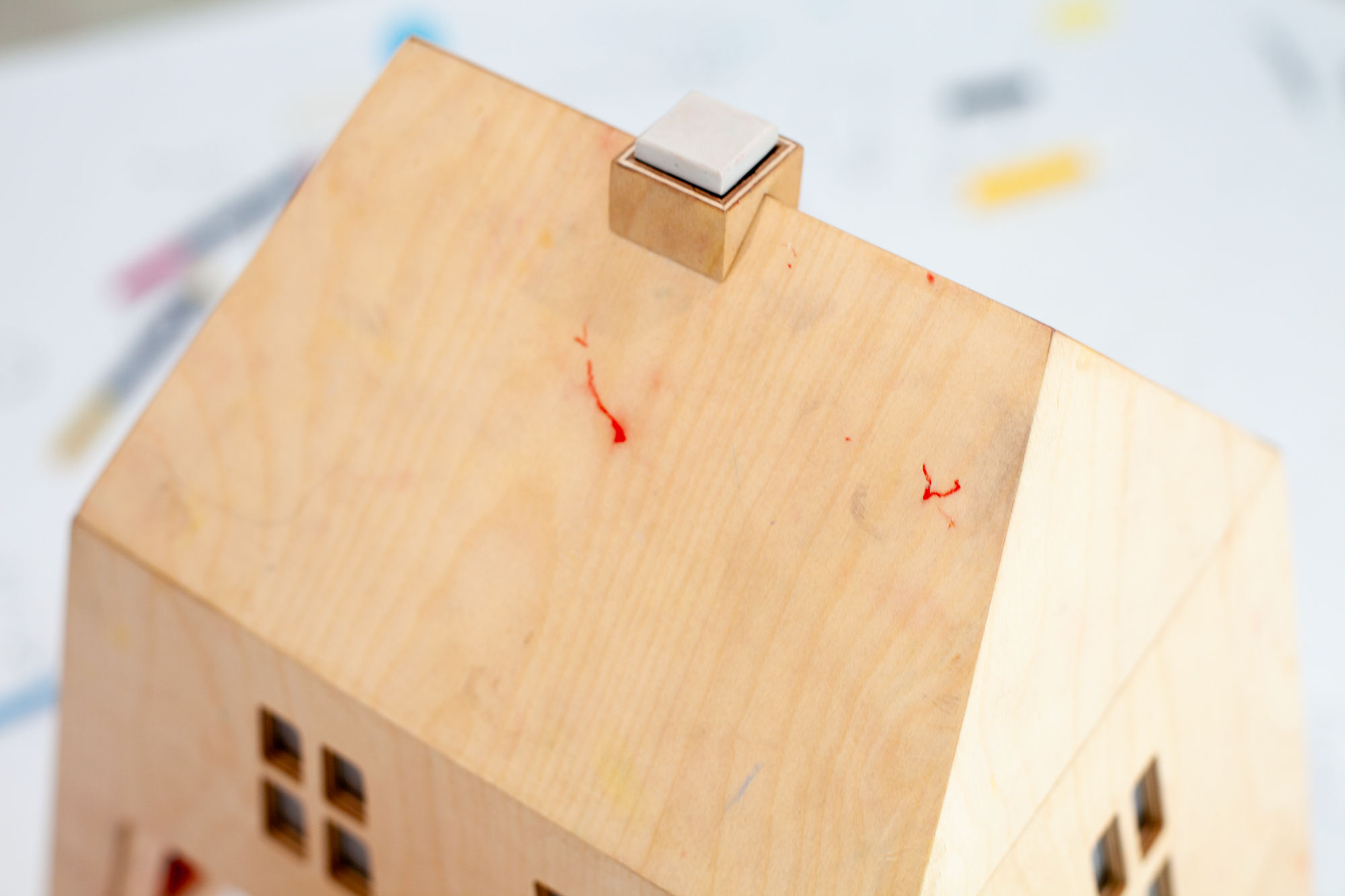
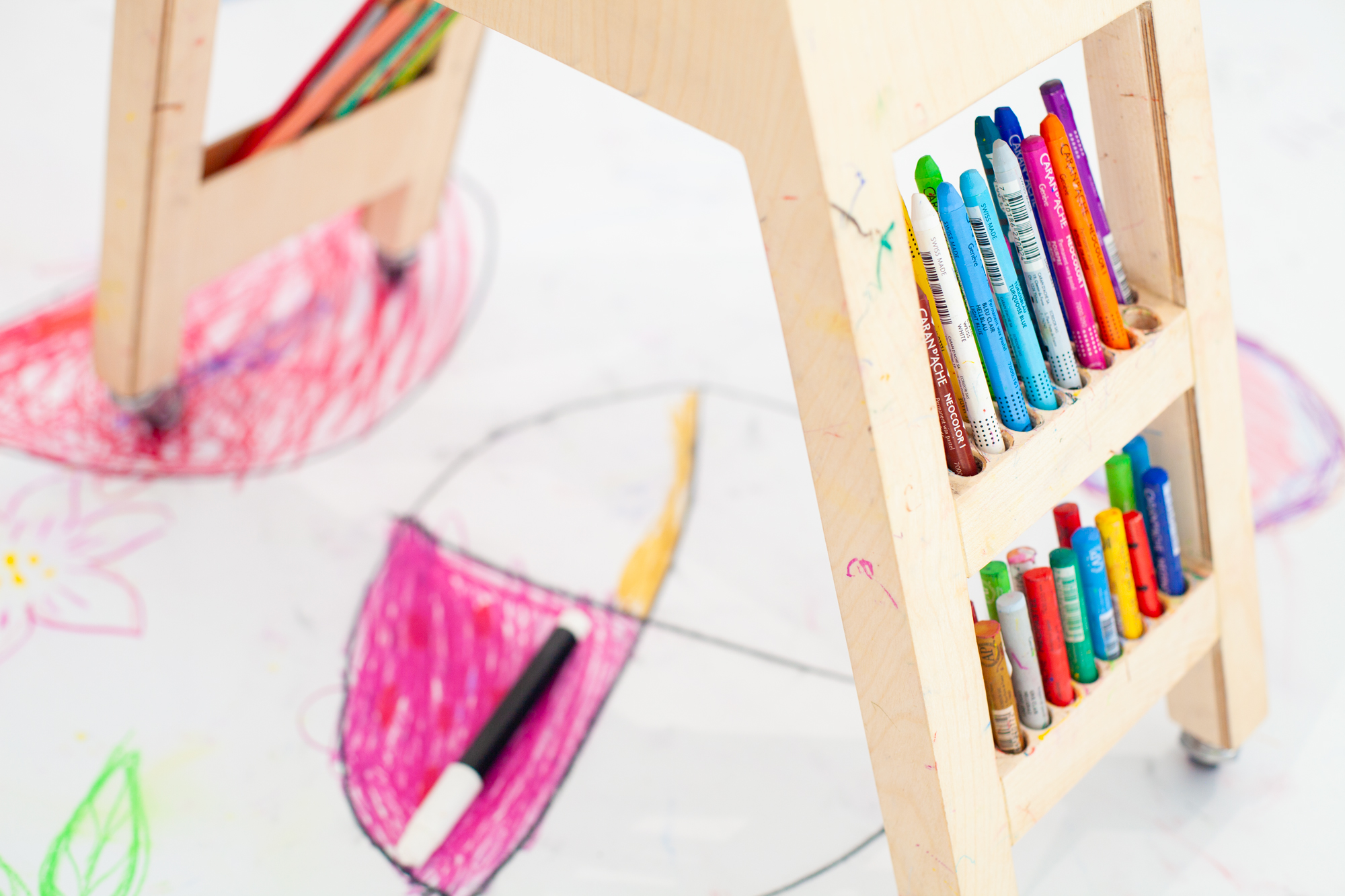
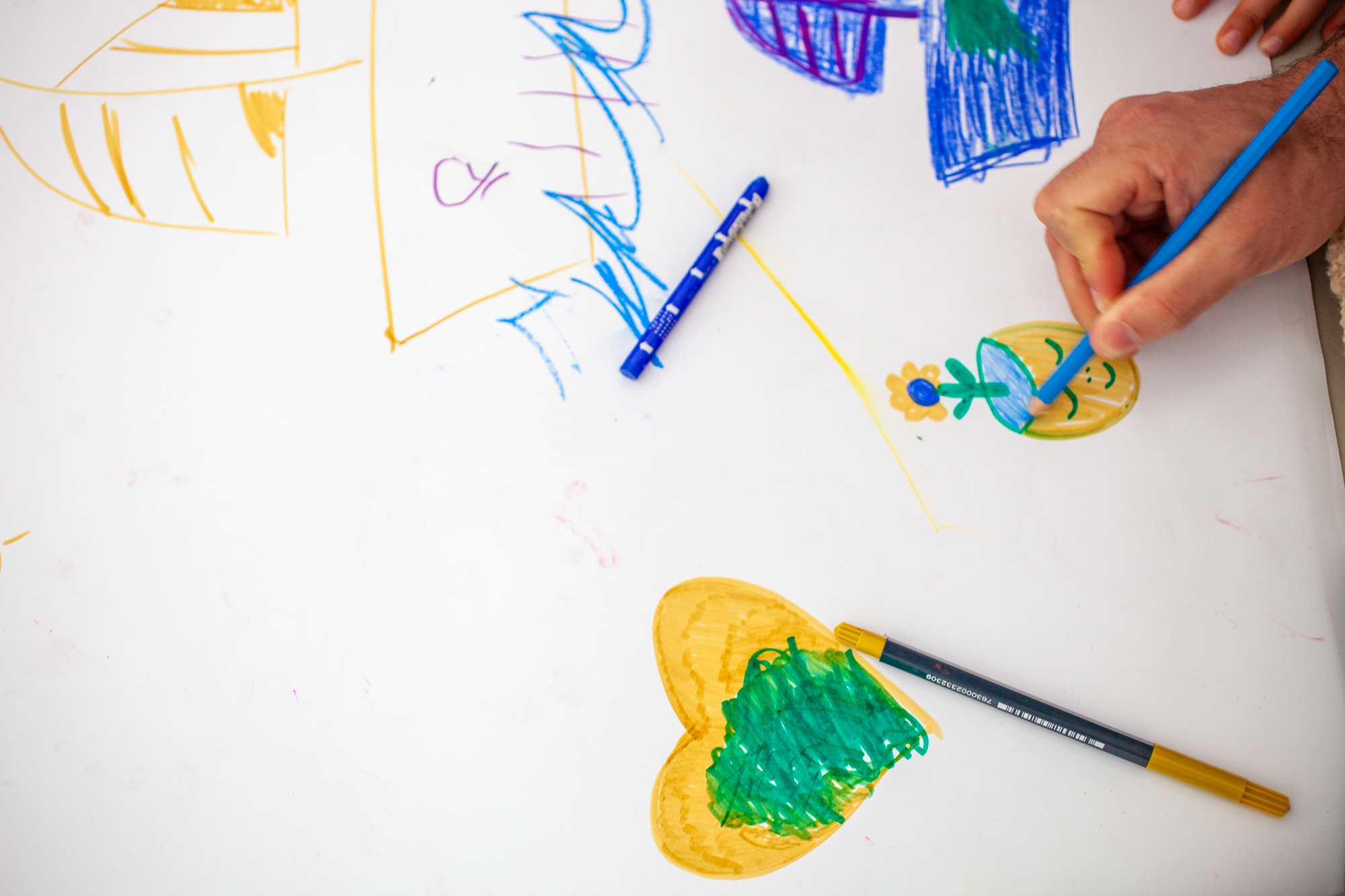
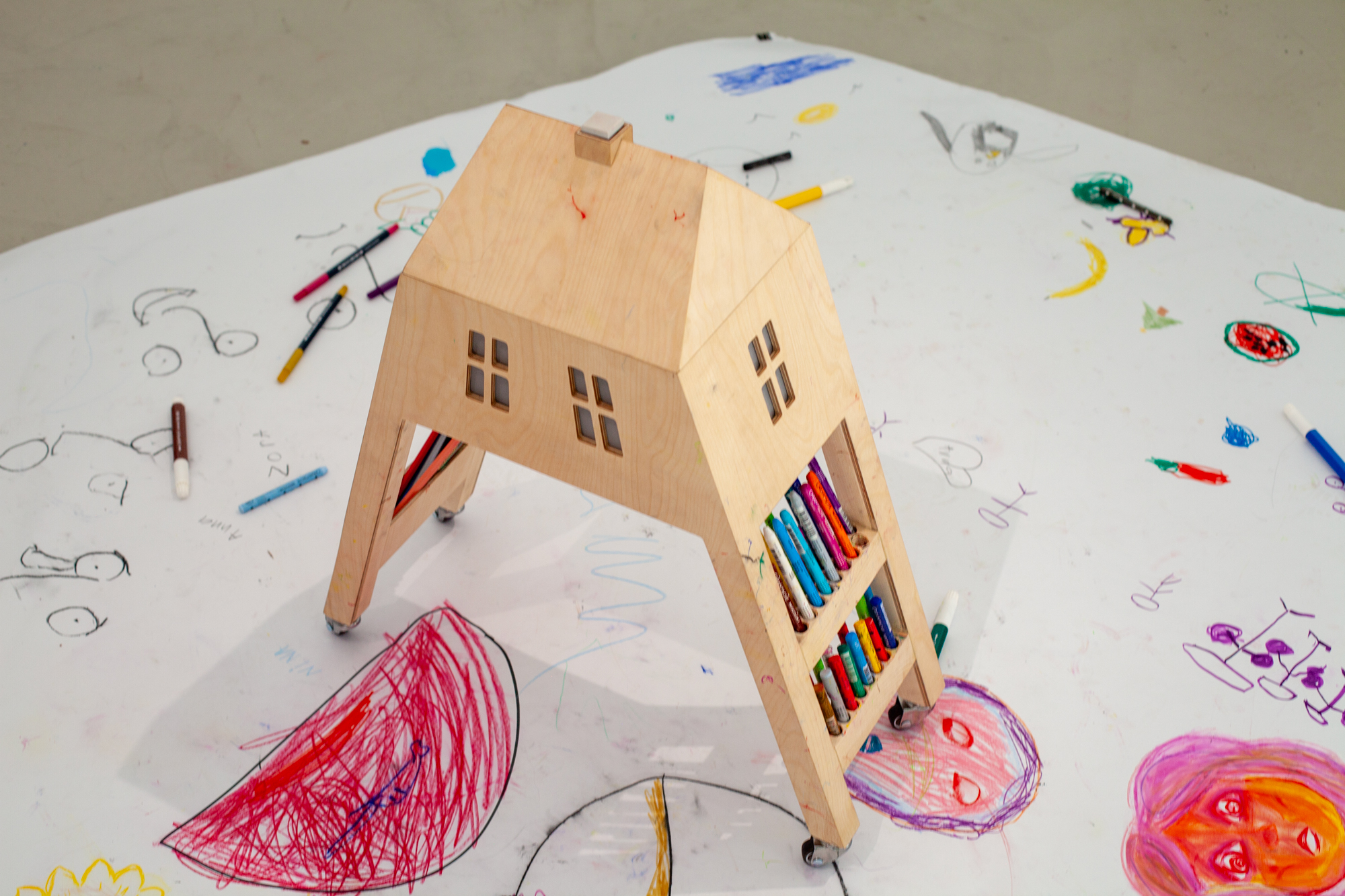
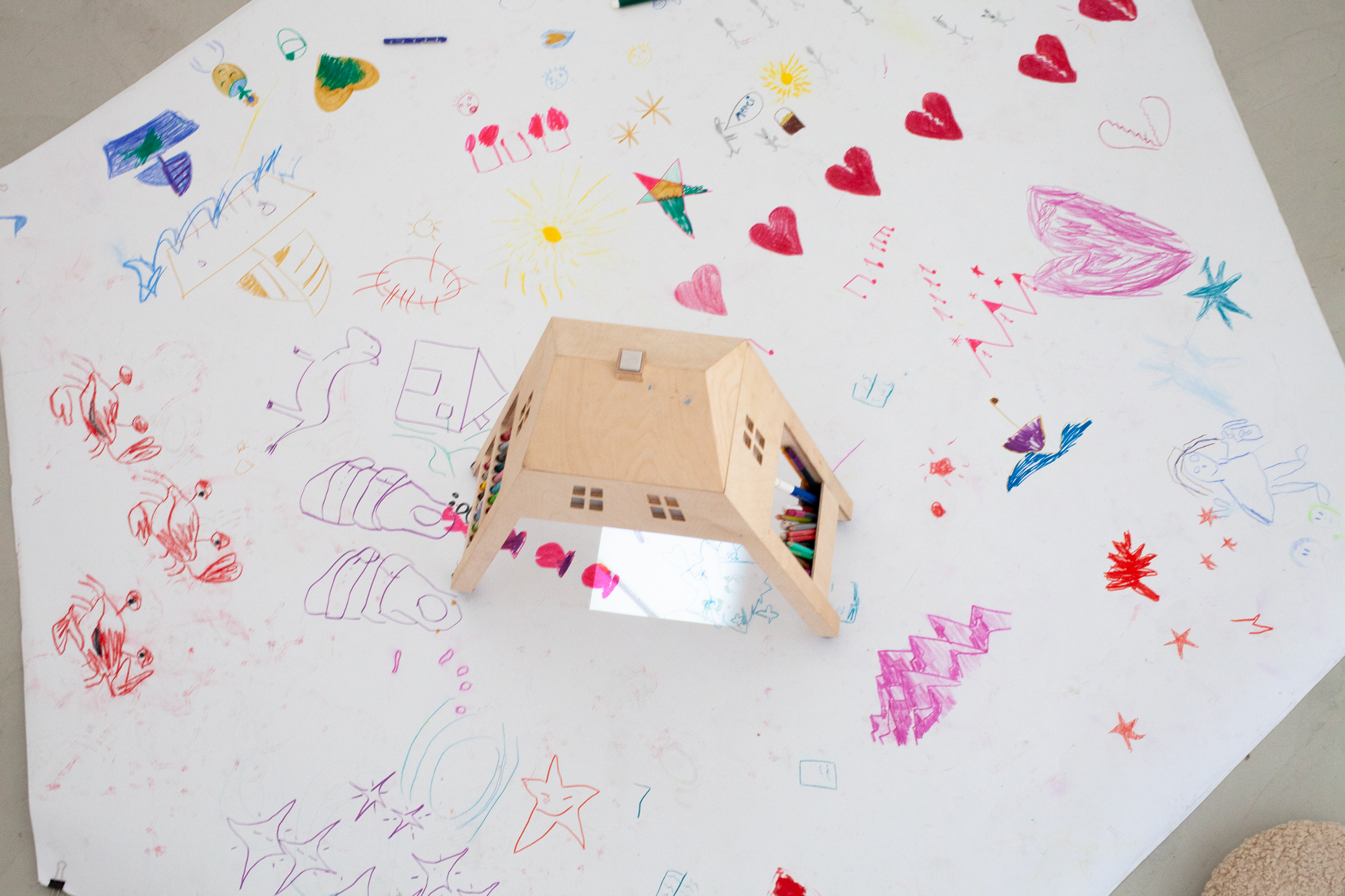
Magic House automates the process of analog animation. At the center of the installation is a large, collective drawing surface. Living on this surface is Magic House, an animation-capture device that transforms individual drawings into a collective film. The installation connects individual creativity to a shared journey, revealing the hidden movement within static forms.
Magic House simplifies the complex process of frame-by-frame animation. With its playful form and innovative projection system, Magic House helps animators insert their drawing into the collective sequence of images that came before it. As new illustrations continue to be added to the surface, a central projection displays the result as an endlessly looping animation.
- Suètone
- Basile Brun
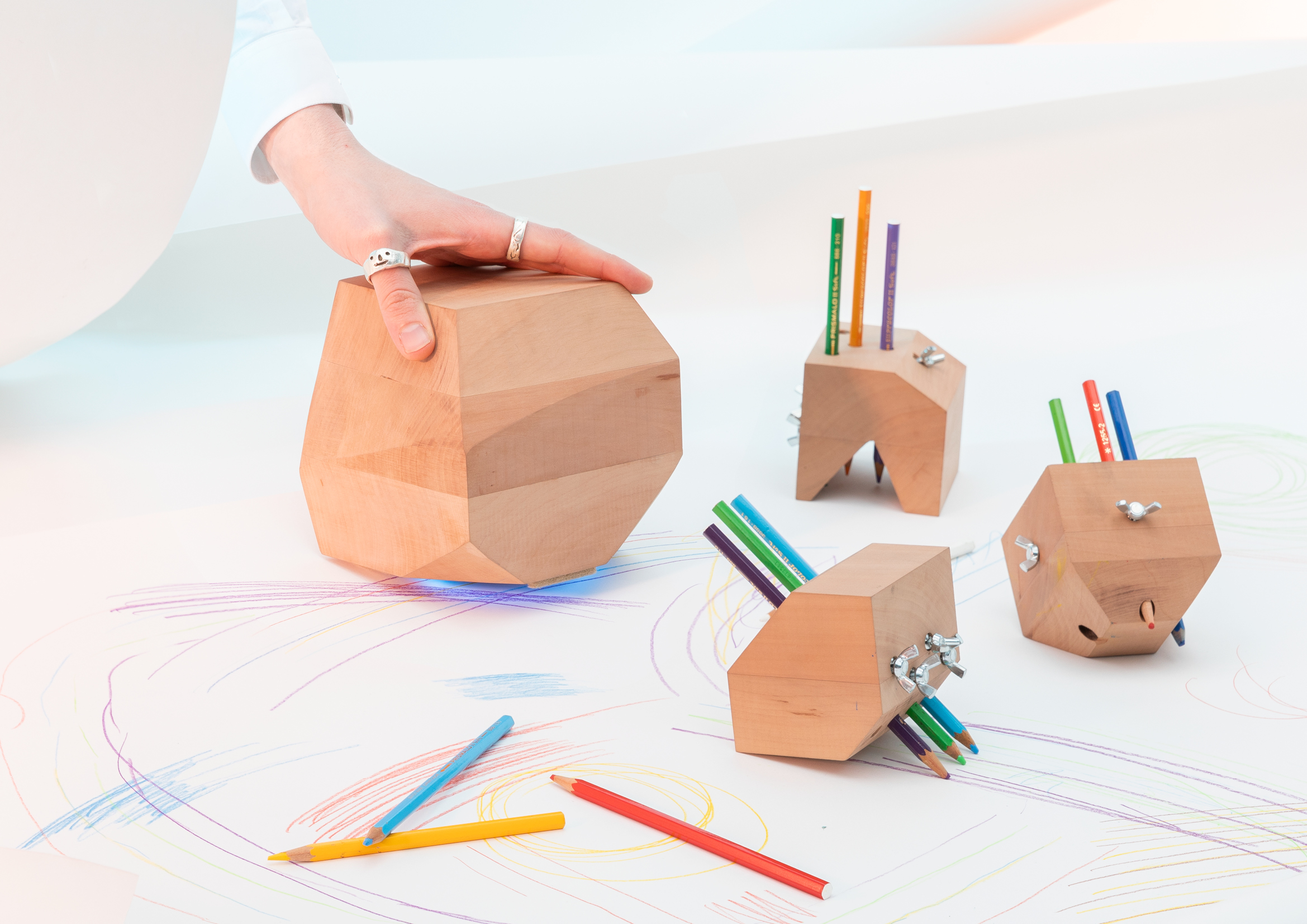
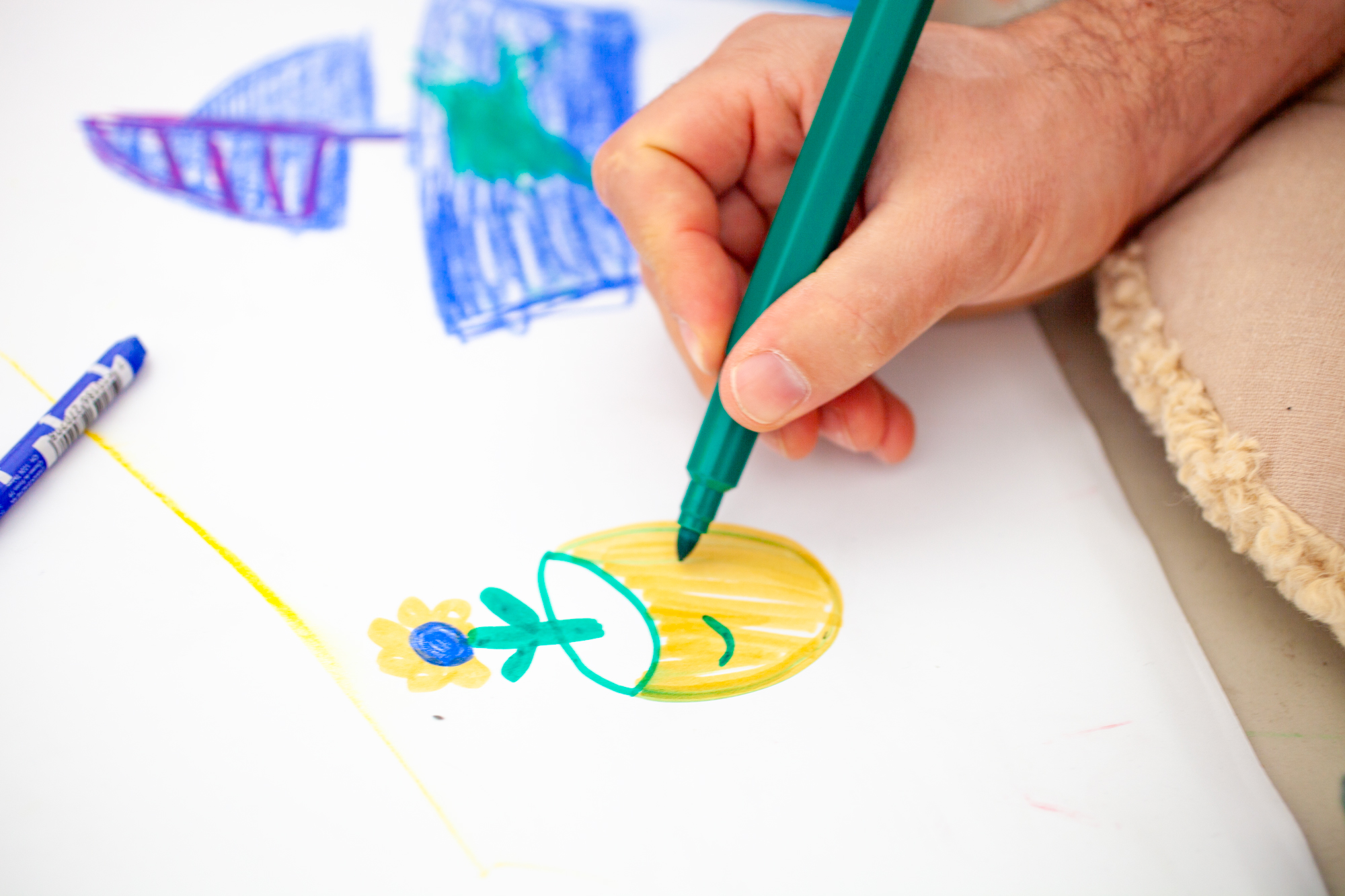
Suètone is a generative music box that transforms your drawings into musical scores. Like a musical stone, Suètone generates melodic patterns as drawings flow around it like a colorful river: an endlessly evolving musical texture; a sonic journey along the flow of color.
Suètone travels alongside a series of drawing tools that function as creative assistants, opening up new vectors of form and line for even greater musical possibilities. By moving these assistants around the drawings, artists can explore new visual and musical expressions.
- Trame Tram Trame
- Mathis Baltisberger & Naomi Blidariu
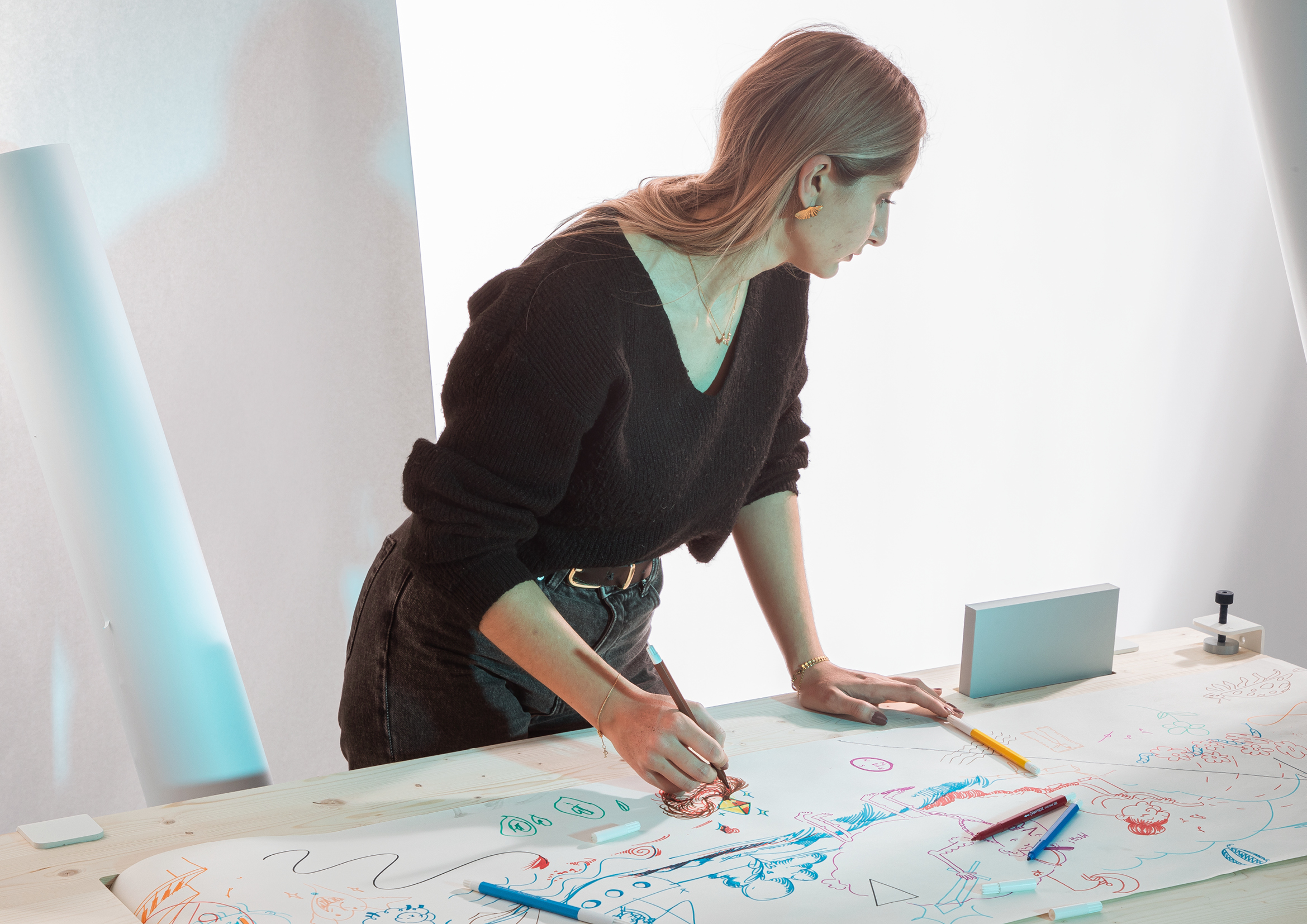
Trame Tram Trame is a collaborative experience centered on illustrated storytelling. In a playful reversal of traditional roles, it is the machine that prompts the human, guiding them toward unexpected narrative paths. What unfolds is an adventure in which each participant adds their personal touch to a narrative tapestry that gradually reveals itself, like a river of ink flowing across the page.
Trame Tram Trame is an interactive system that combines traditional drawing, interactive electronics, and artificial intelligence into a device for shared, collaborative storytelling.
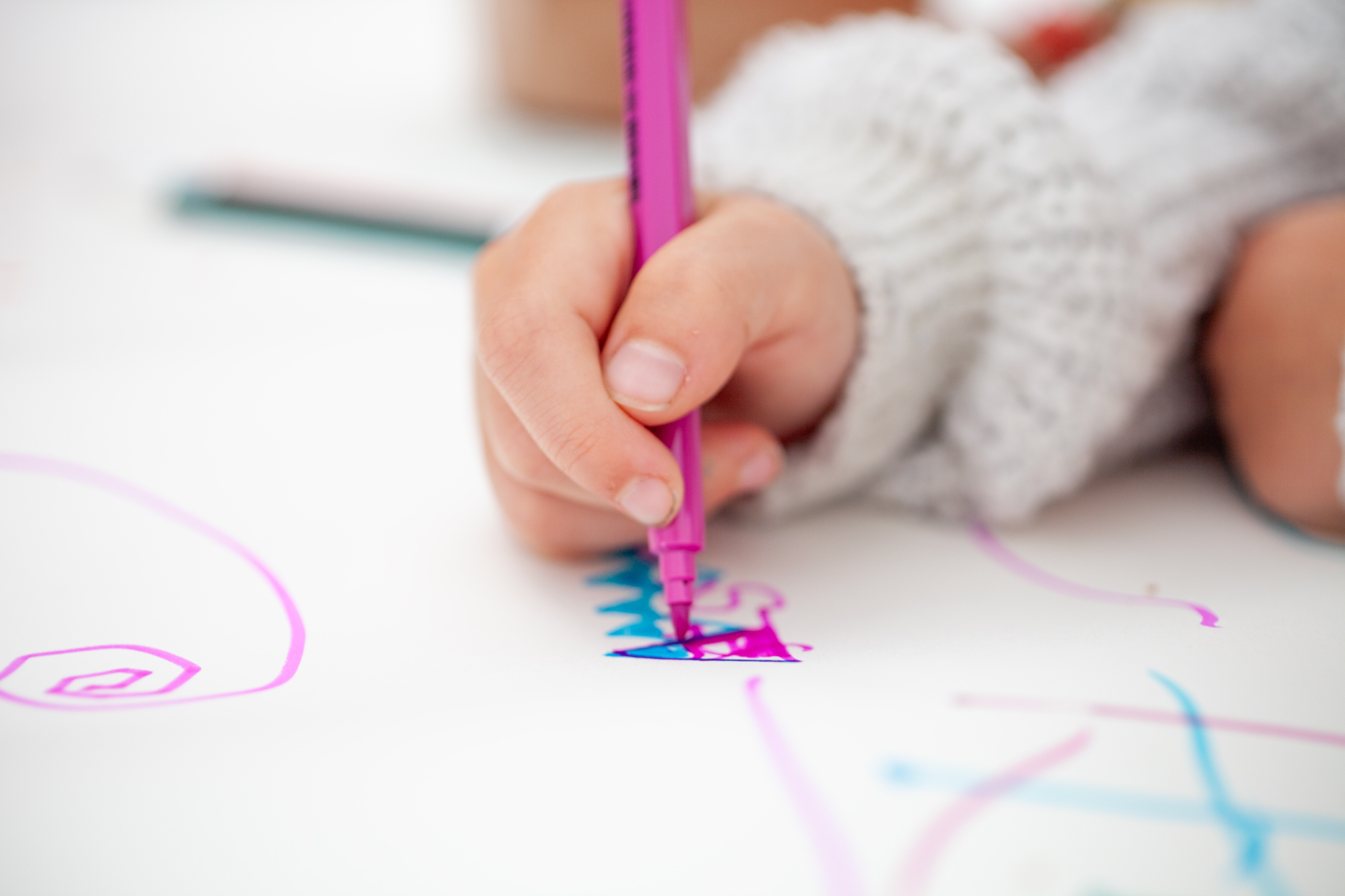
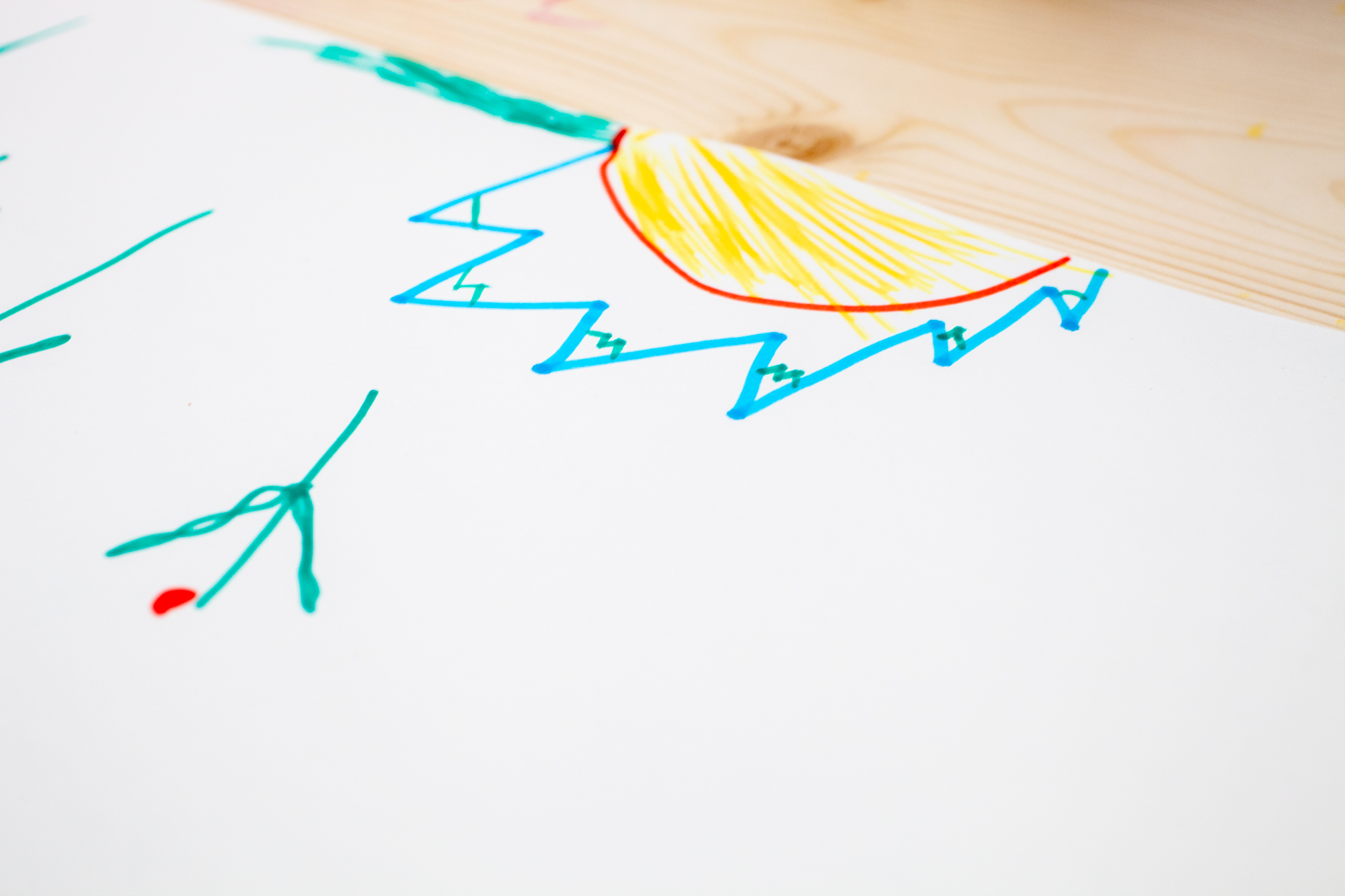
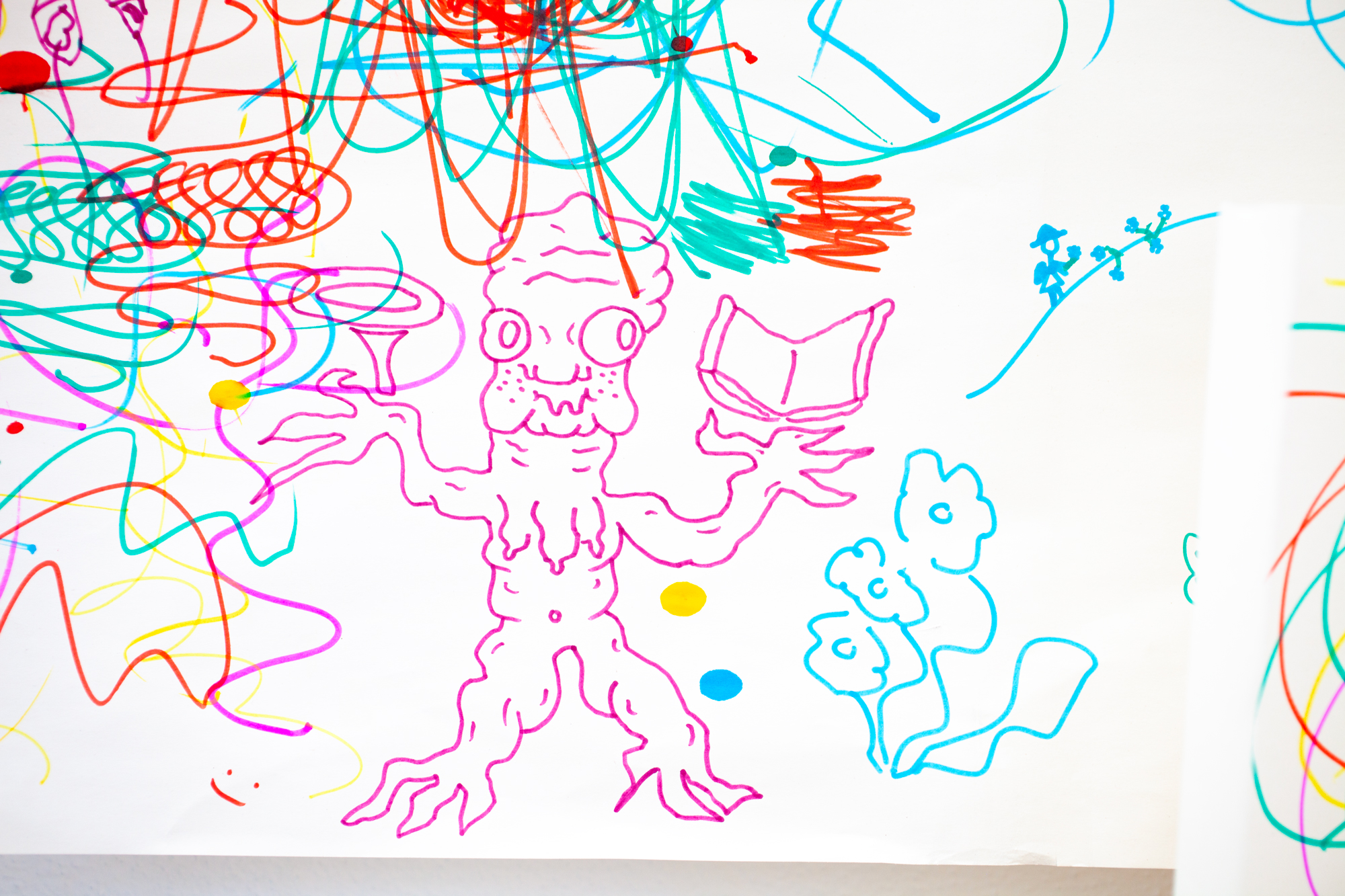
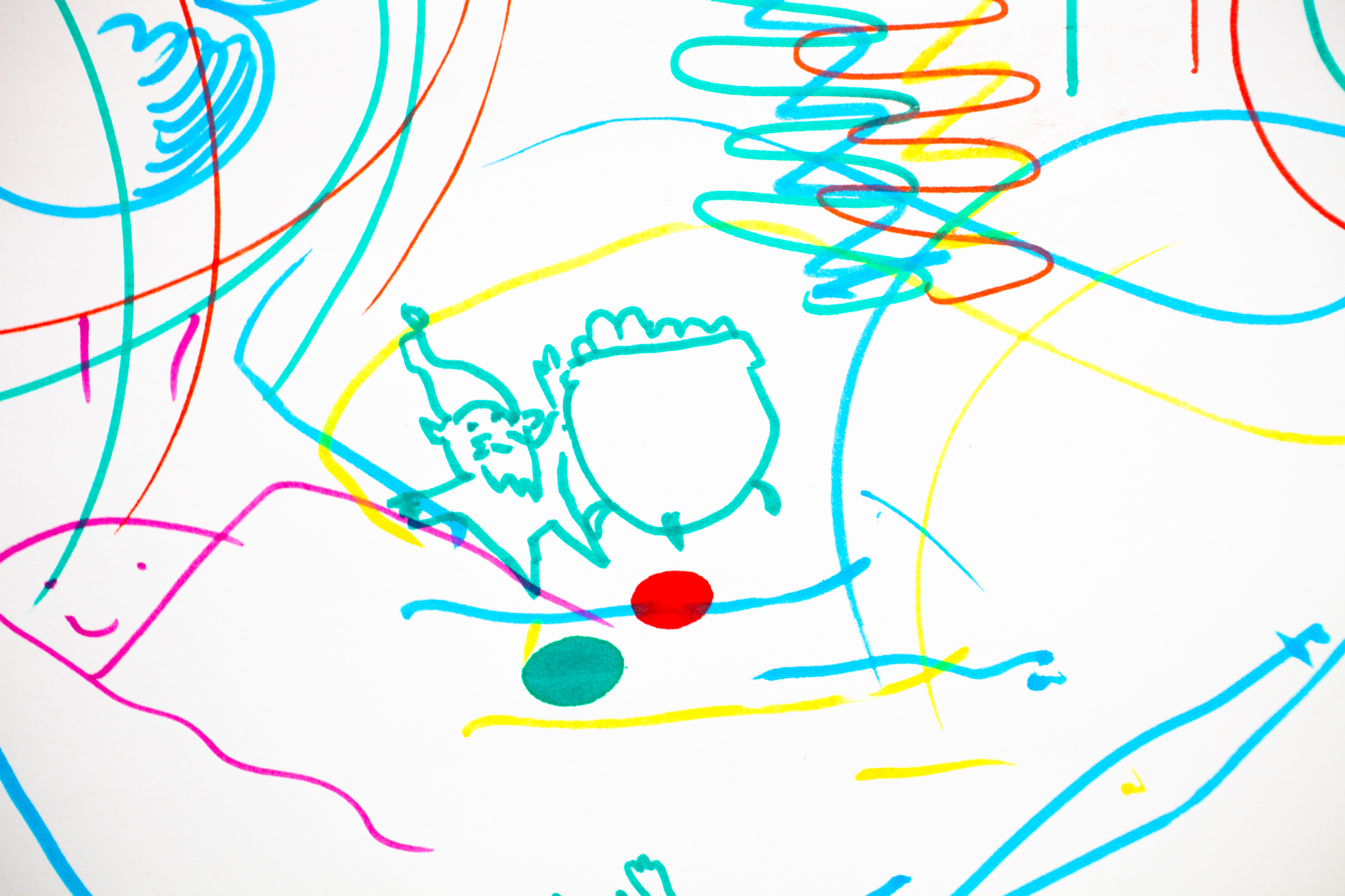
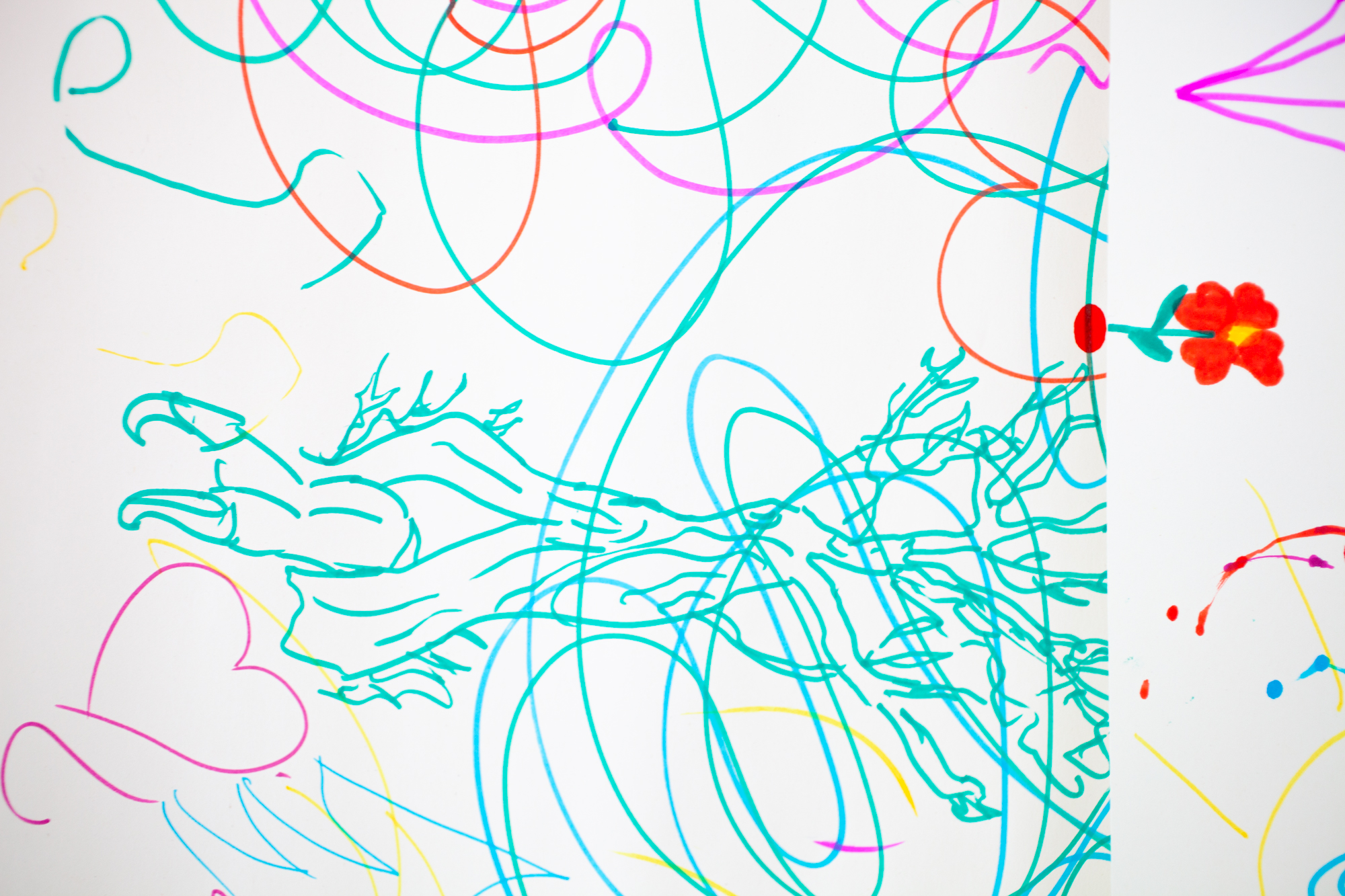
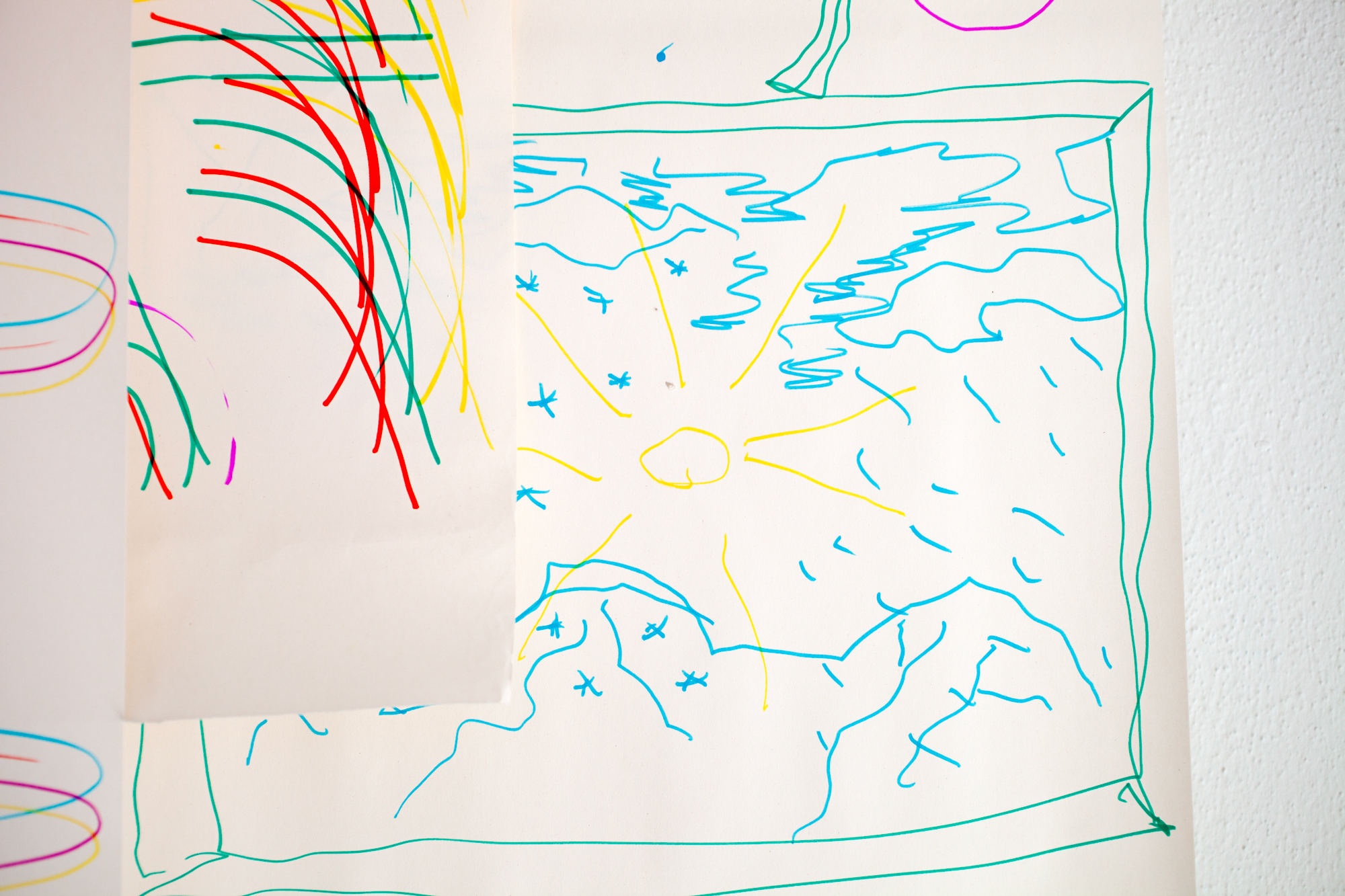
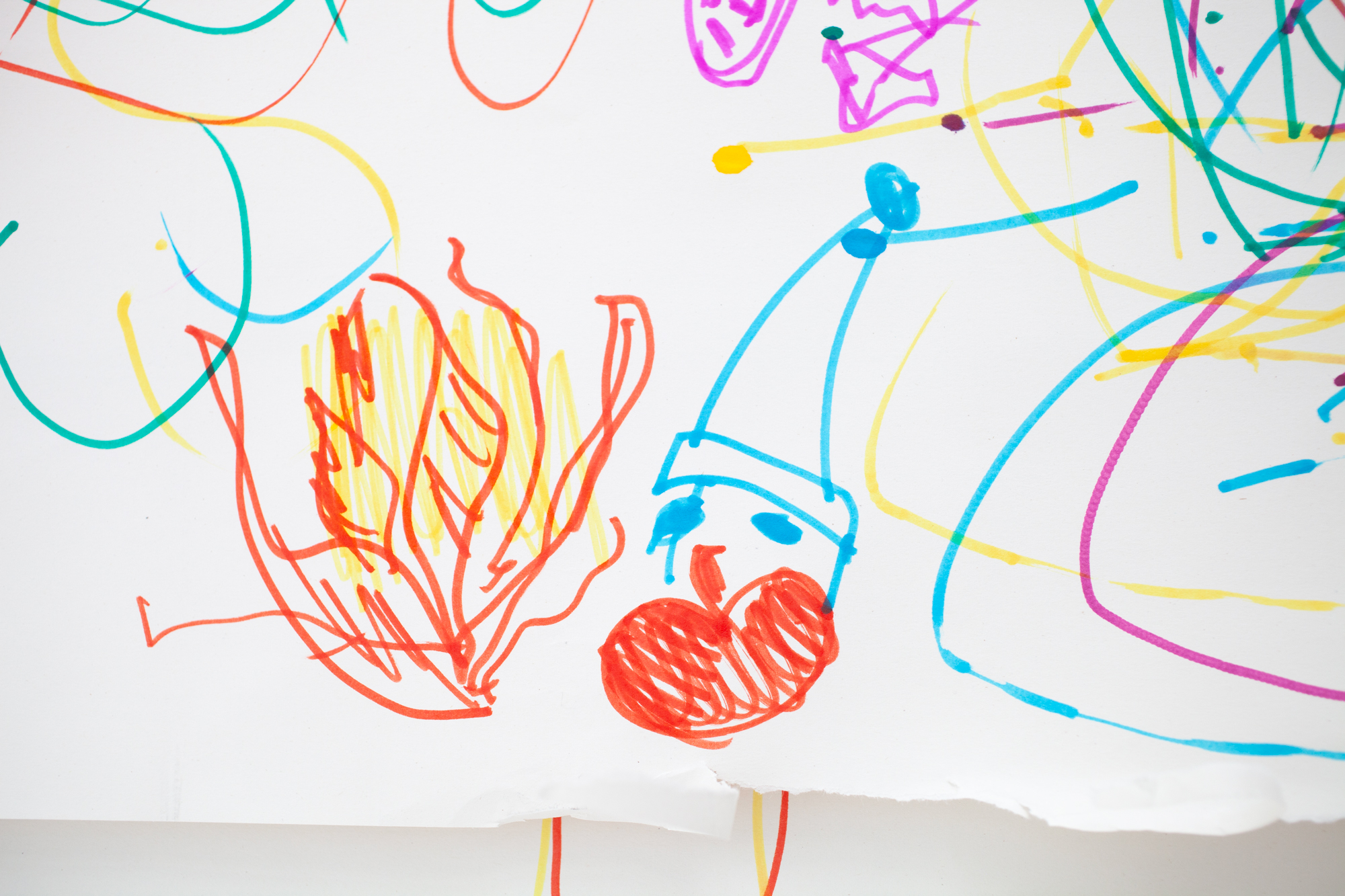
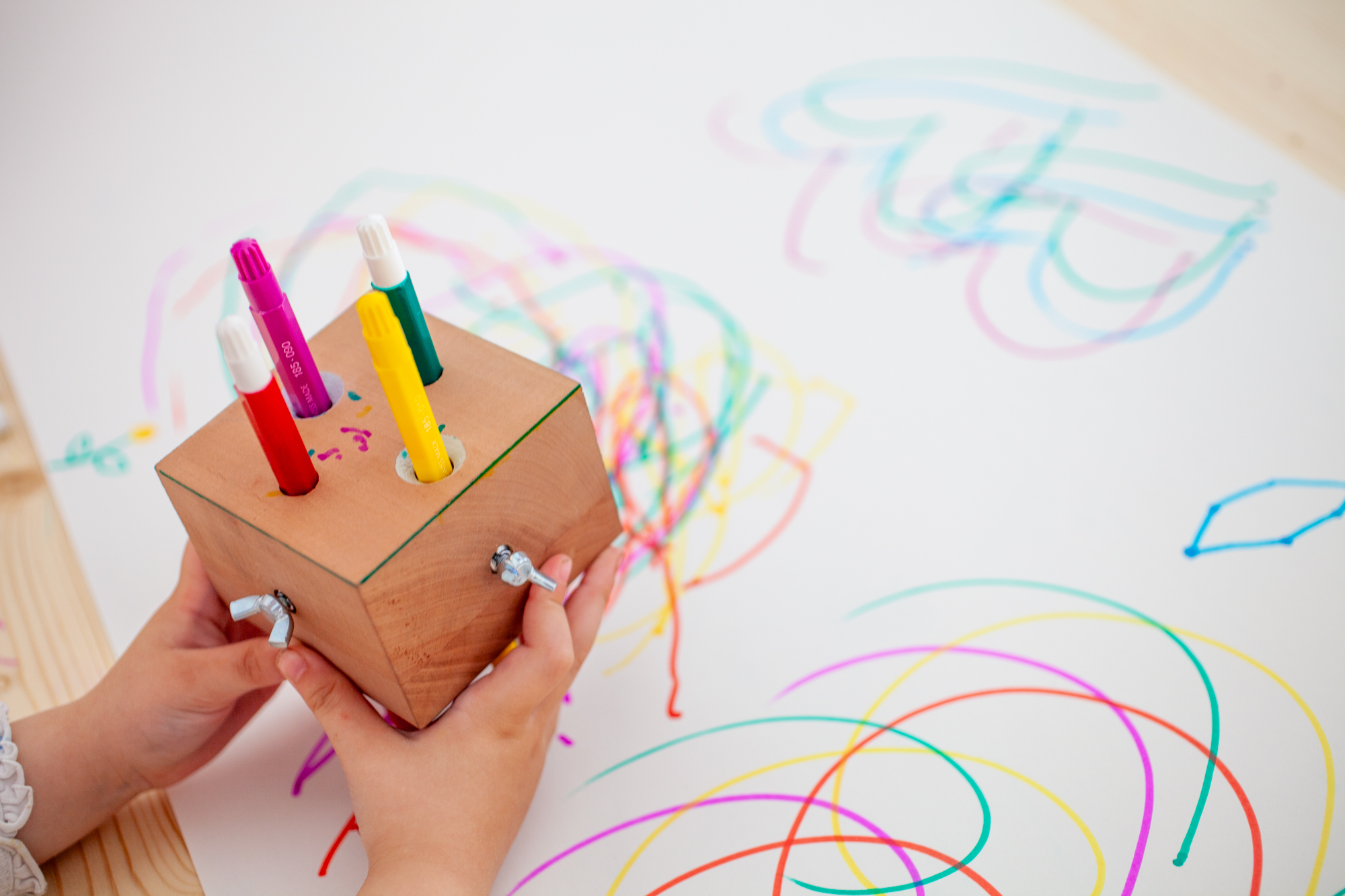
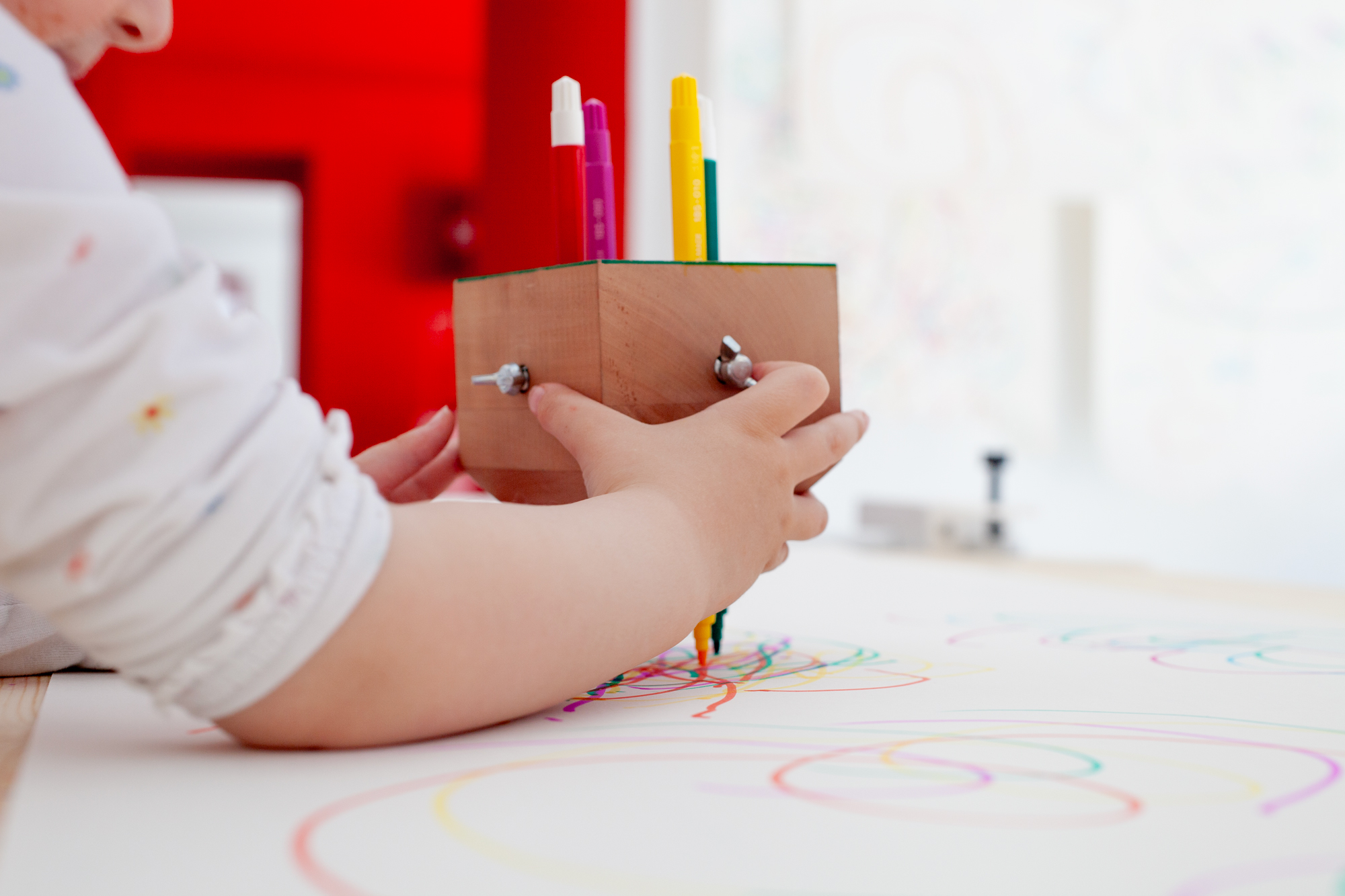
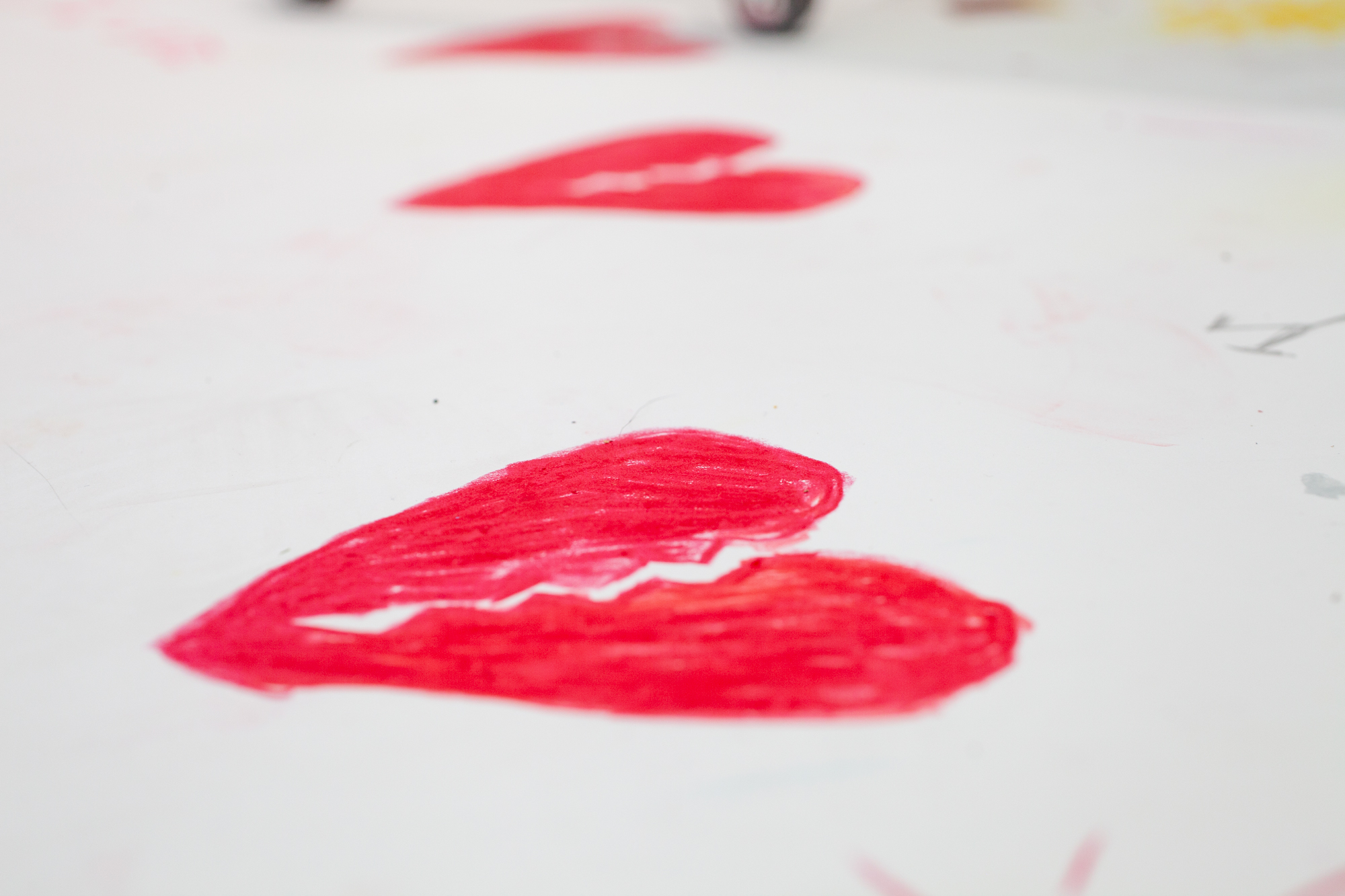
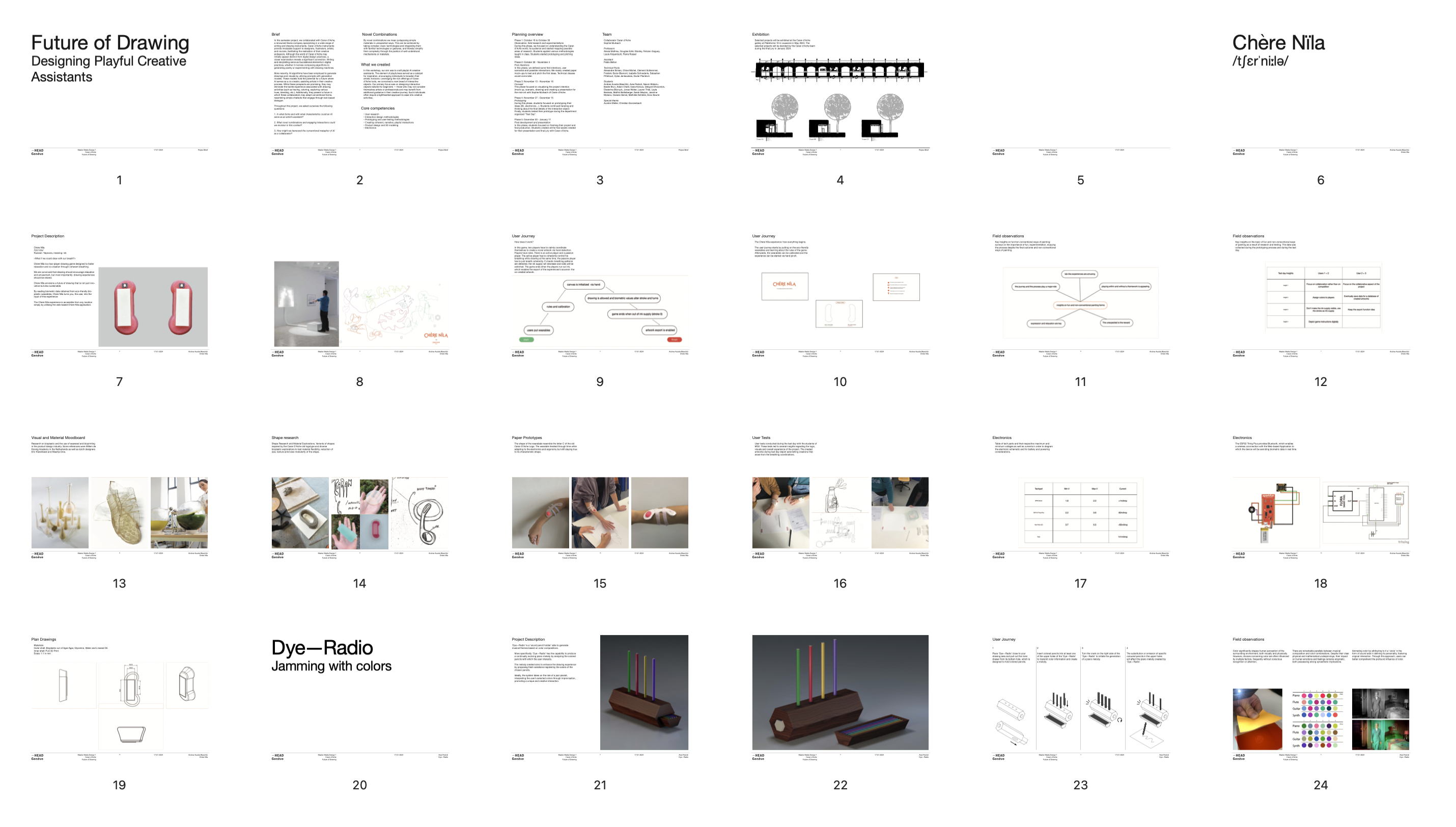
There were in total 17 original prototypes created during the first phase of this project. Here is a 220-page booklet grouping all of the proposals: 2024-01-16-HEAD-MMD-Future-of-Drawing.PDF
Core competencies taught:
- User research
- Interaction design methodologies
- Prototyping and user-testing methodologies
- Creating coherent, narrative, playful interactions
- Product design and 3D modeling
- Electronics
Planning overview
- Phase 1
- Observation, field research and experimentations
- October 16 to October 30
- During this phase, we focused on understanding the Caran d'Ache world, its audience and started mapping possible areas of research. + Students applied various methodologies taught in class. Students started prototyping and pitching ideas.
- Phase 2
- First intentions
- October 30 - November 4
- In this phase, we defined some first intentions, user scenarios and possible interactions. We mainly created paper mock-ups to test and pitch the first ideas. Technical classes would come later.
- Phase 3
- Concept
- November 13 - November 16
- This phase focused on visualizing the project intention (mock-up, scenario, drawing) and creating a presentation for the mid-crit with Sophie Murbach of Caran d’Ache.
- Phase 4
- Prototyping
- November 27 - December 15
- During this phase, students focused on prototyping their ideas (3D, electronics…). Students continued iterating and thinking about the final details of the interactive object. Finally, students tested their prototype during the department organized “Test Day”.
- Phase 5
- Final development and presentation
- December 20 - January 17
- In this phase, students focused on finishing their project and final production. Students created all the final assets needed for their presentation and final jury with Caran d’Ache.