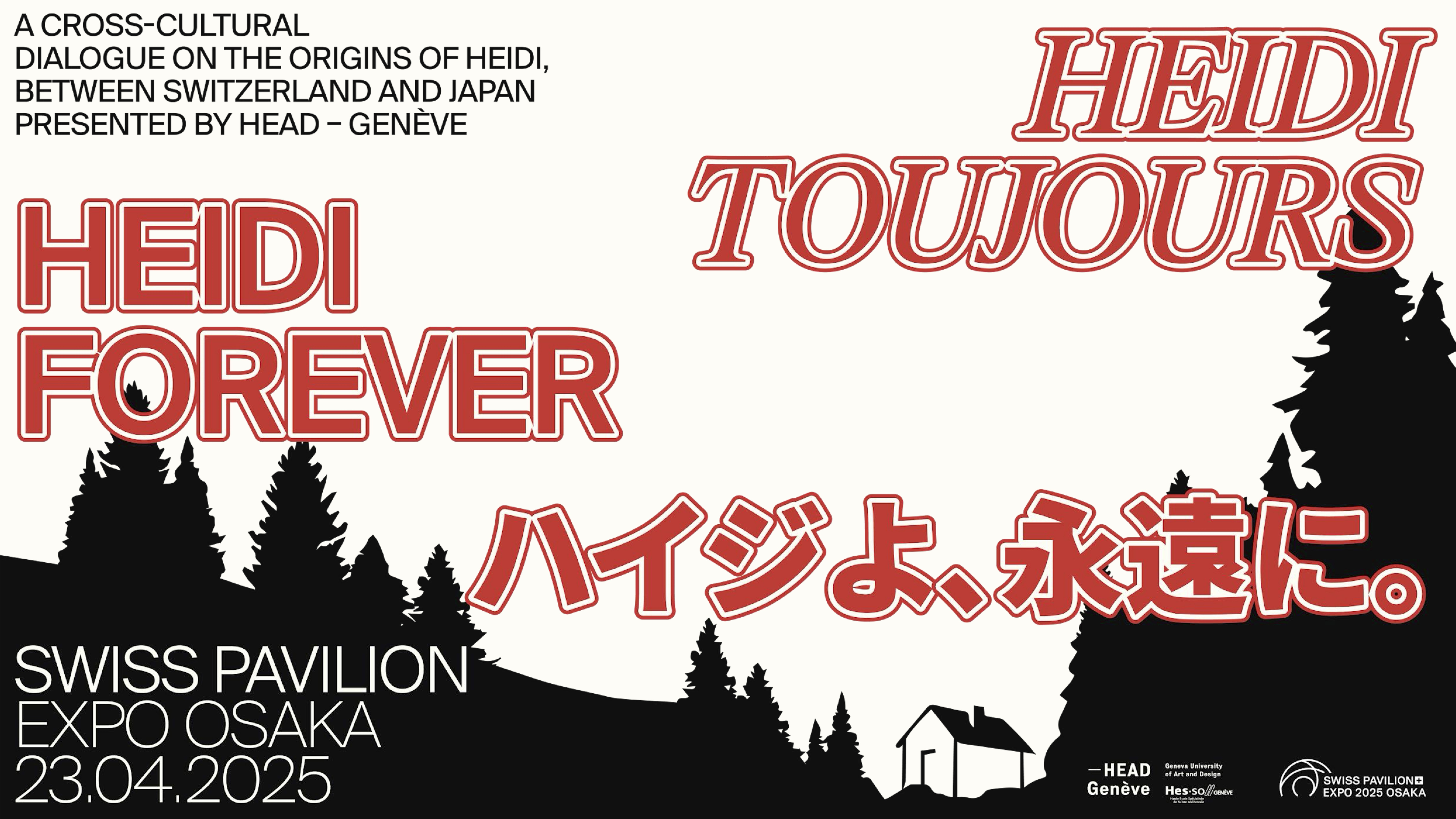
Alongside the immersive performance My Name is Heidi, I curated and moderated the panel Heidi Forever: a discussion exploring Heidi’s origins, her connections to Switzerland and Japan, and the series of virtual reality prototypes we developed to explore these themes with the students of the Media Design Master programme.
From the presskit:
Held at the Swiss Pavilion in Osaka, this event featured Lada Umstätter, Director of HEAD – Genève; Prof. Dr. Takashi Kawashima; Douglas Edric Stanley, Designer and Maître d'enseignement in Media Design; and Anita Hugi, Head of the Cinema Department. Together, they will examine Johanna Spyri’s original work and its many adaptations – from illustrations and film to virtual reality – bridging tradition and future visions.
- Workshop: Out of the Eons
- Professors: Douglas Edric Stanley (lead), Sabrina Calvo, Pierre Rossel
- Heidi Forever VR Projects (PDF)
Before beginning work on the My Name is Heidi performance for Osaka 2025, the students of Media Design had already started exploring the themes of Heidi past, present, and future. Our final objective for this workshop was to build a VR demo by June 14, 2024. Each demo was designed as a proof-of-concept for the Swiss Pavillion that at the time was still in planning stages.
To start off the workshop, we began with a close reading of the original novel Heidi, written by Johanna Spyri in 1880 and 1881. Here is a text written by Sabrina Calvo with our opening questions about this seminal novel in children’s literature:
During her trip to Frankfurt where she is to stay with Clara Sesemann, Heidi falls ill. The story of her suffering, a poor child uprooted from her mountain, and her possible fever-induced dreams and nightmares about the industrial city, allow us to identify a problem illustrating the tension between the dream of an idyllic nature and a fallen mechanical world. Between the two, a glimmer of hope: the faint flickering flame of our heart’s beating, facing the impossible task of having to frame and understand the world, while rejecting both the facile postures of idealism and progress.
From this starting point, we explore the dynamics of virtual worlds in a world on fire, our relationship with nature, and the possibility of mental landscapes reflecting back onto us abstractions and semi-figuration. The increasingly important role of these new spaces in our lives, the inversion of cyberspace in our daily lives — the accretion of new sensitive materials as a proxy for interaction — and our #&#$-up social priorities… what memories will remain of the world of sun and rain? Of the living? Of freedom? Will we be exiles from reality? From matter? Can we be little potential Heidis, frolicking in an endless wonder of the childhood of the world? Is innocence soluble in cyberpunk?
Between children's literature and decadent fiction, we must proceed with tenderness as we question the finiteness of all things; as we interrogate decay; as we explore the unknown.
The Idea of Nature. What are we talking about when we discuss nature and hypernature? The veil of Isis: a clichéd metaphor transformed by each era… should it be replaced by some other gesture?
Switzerland will be at the heart of our investigations — as a place of tension, of paradox, but also as a real place of mountains and lakes.
The Technological Nightmare. In the no-exit hellscape of this world, do we have the keys to rediscover the work of the hand and of the heart, combined with the forces of the virtual?
Melancholy and Hope. A final tension: as we lose our bearings, a desire for an absolute that could save everything — opening the fragility of our tiny little existences onto some form of eternity.
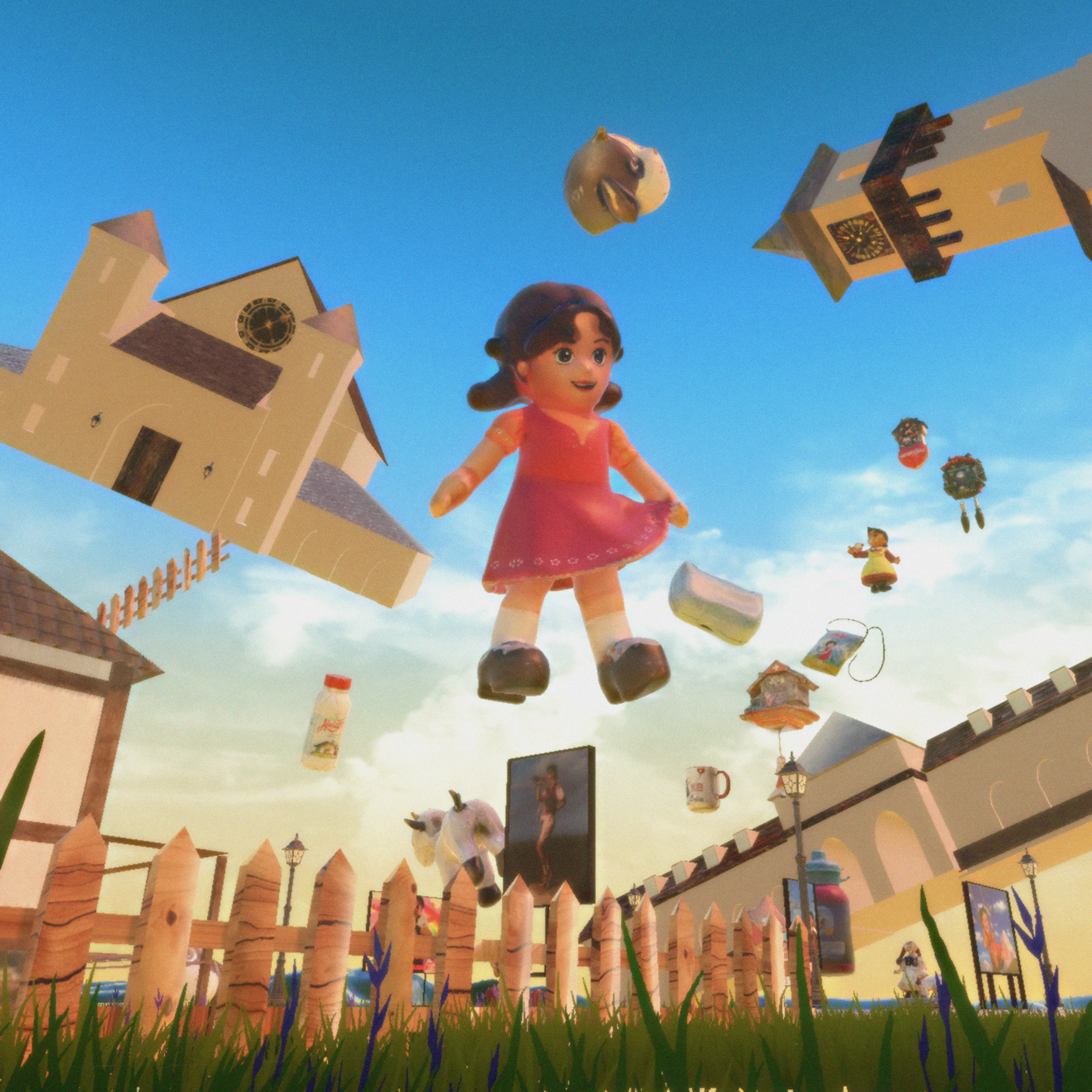
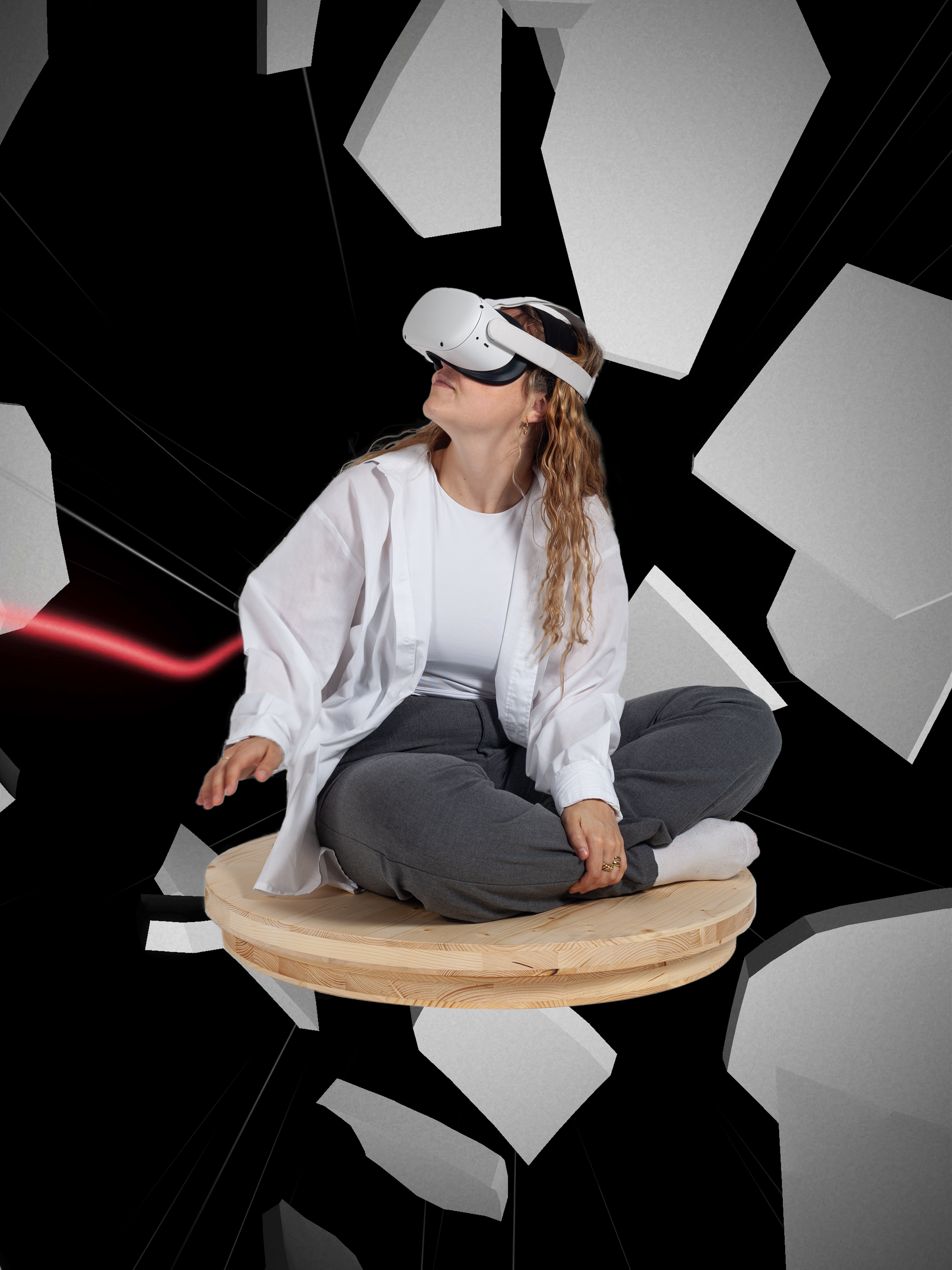
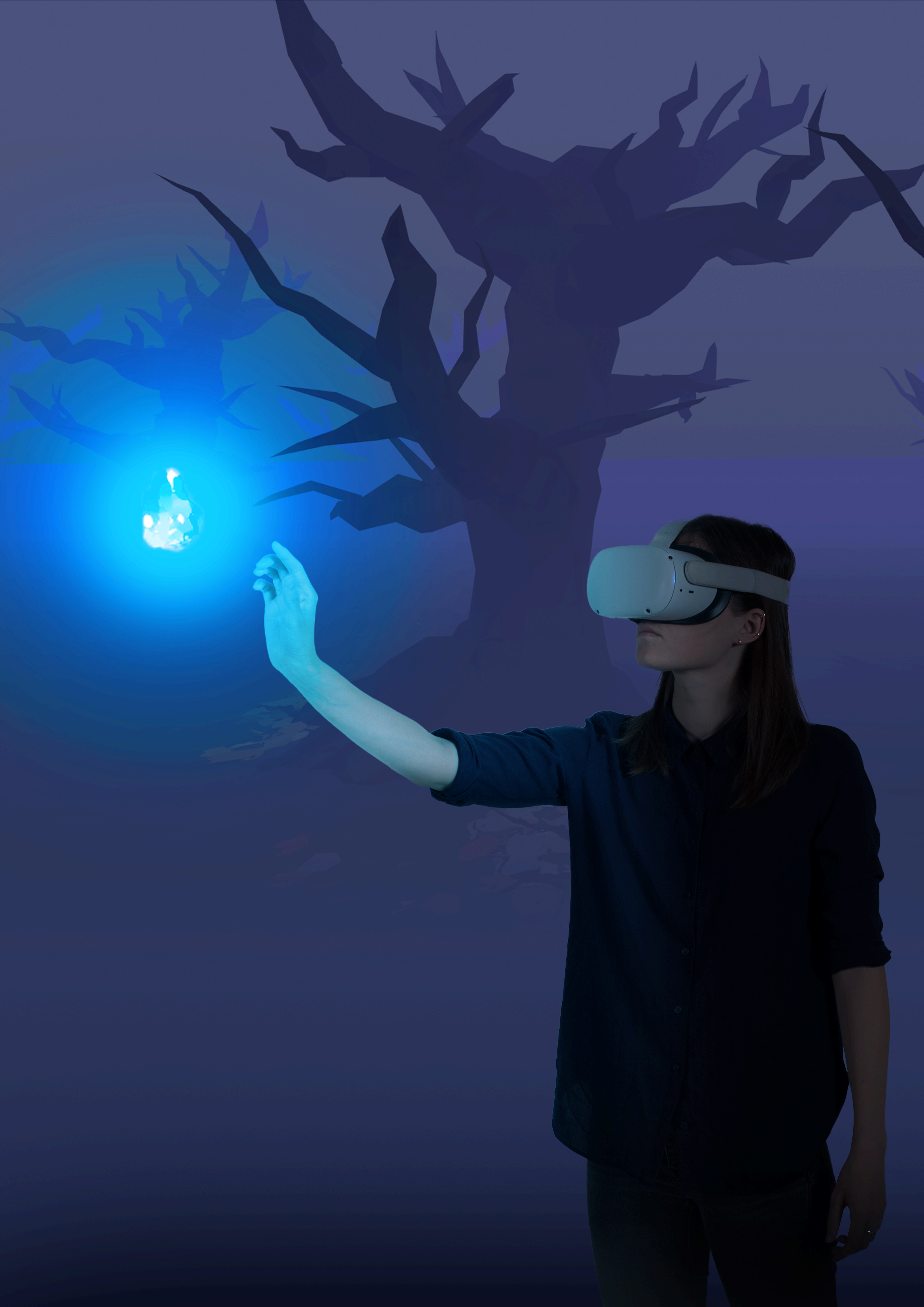
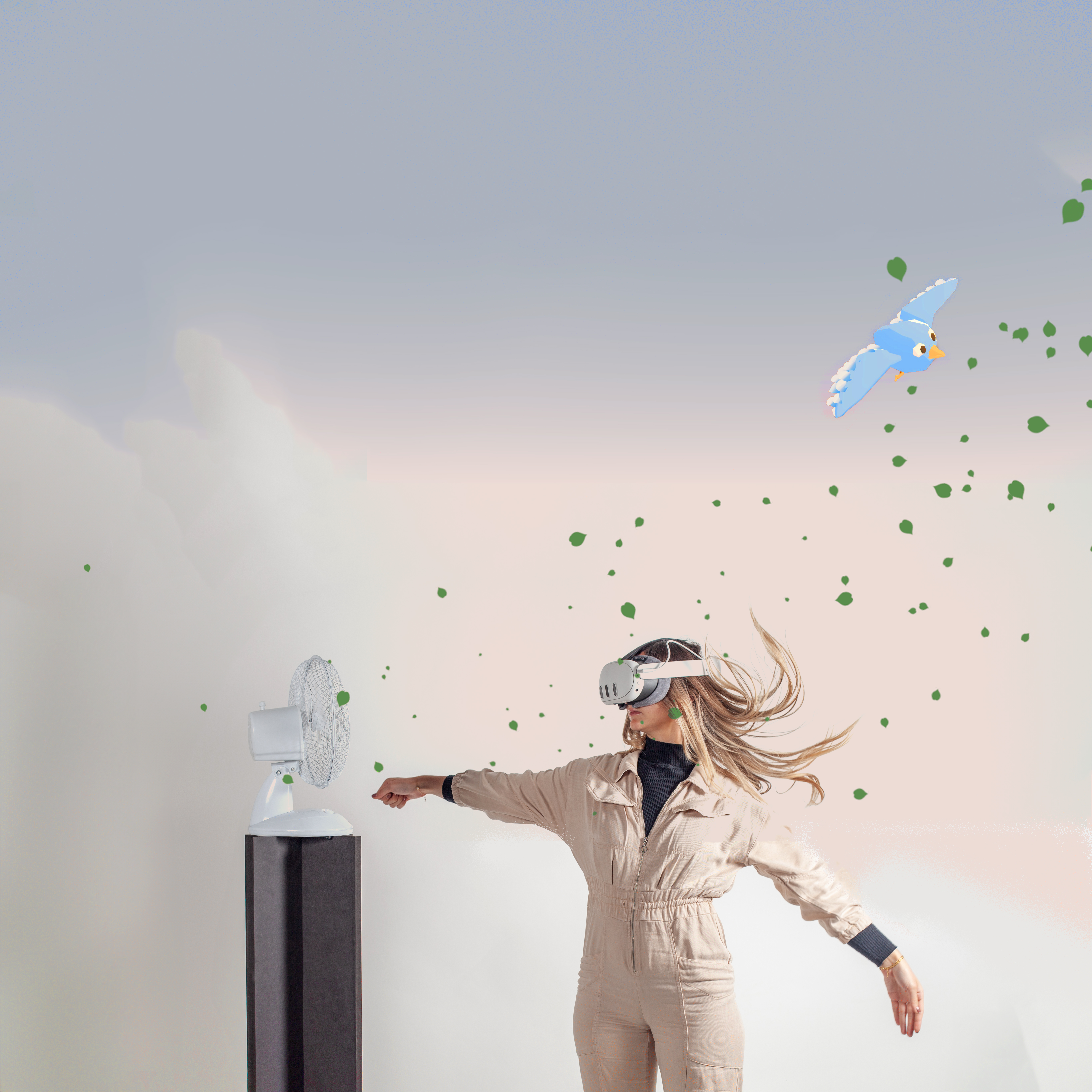
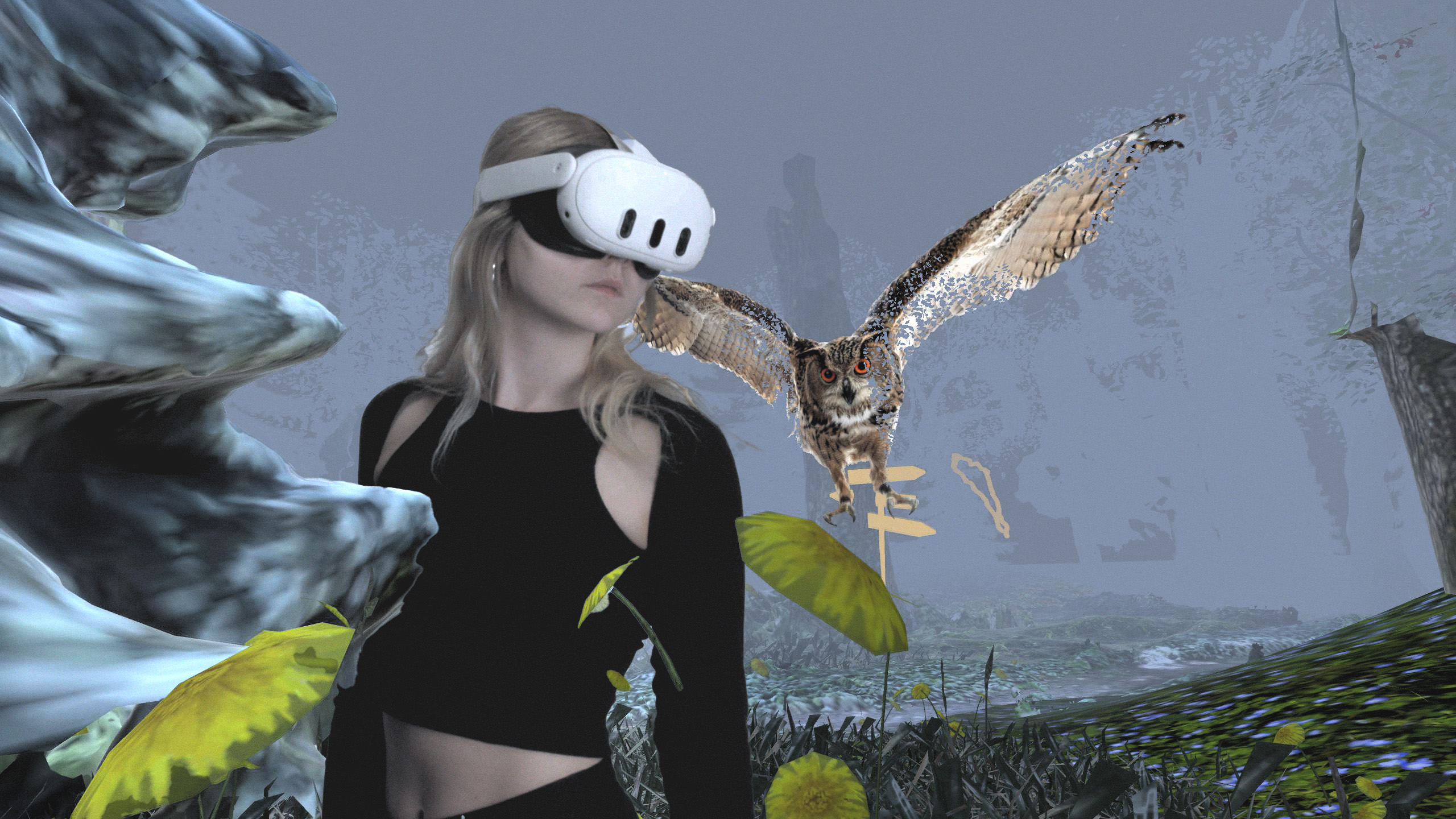
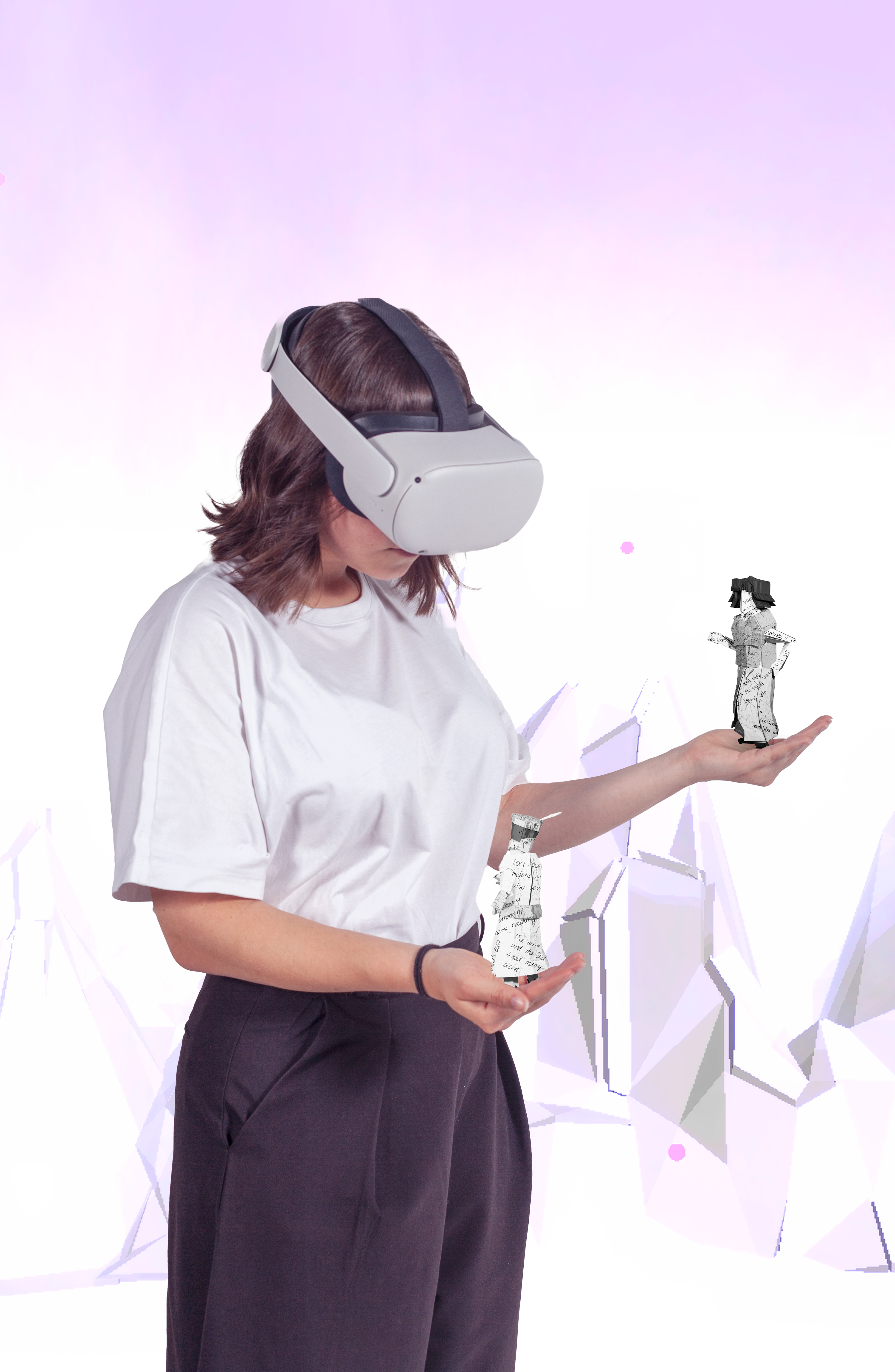
During the workshop, six projects were developped. You can discover all six proposal in the above link, or here: Heidi Forever VR Projects (PDF).
- Project: Johanna´s Spyrit
- Students: Adam Chatir, Sarah Meylan, & Enzo Seurre
- Interview: Douglas Edric Stanley
- Video link: Making of Johanna’s Spyrit (YouTube)
Of the six prototypes, one project was selected for a VR Demo at the Swiss Pavilion in Osaka. I conducted an interview + behind-the-scenes edit with the team of Johanna´s Spyrit that shows how they built the experience. This project was presented during the panel Heidi Forever at the Swiss Pavillion on April 23, 2025.
- Heidis Alptraum | Heidi’s Nightmare | Le cauchemar de Heidi
- Anita Hugi (2022)
Another significant influence on our work for these VR projects was Anita Hugi's film Heidis Alptraum.
As her film was a fundamental starting point not only for our VR prototypes, but also for the entire My Name is Heidi performance, I decided to film and edit this odd little interview so that I could dive deeper into the subject, and ask Anita to specifically contextualize not only her film, but also how it connected to our overall HEAD – Genève project. We were both quite happy with the results of the strange little oddity.